I. Definition & Principle
What is heat staking?
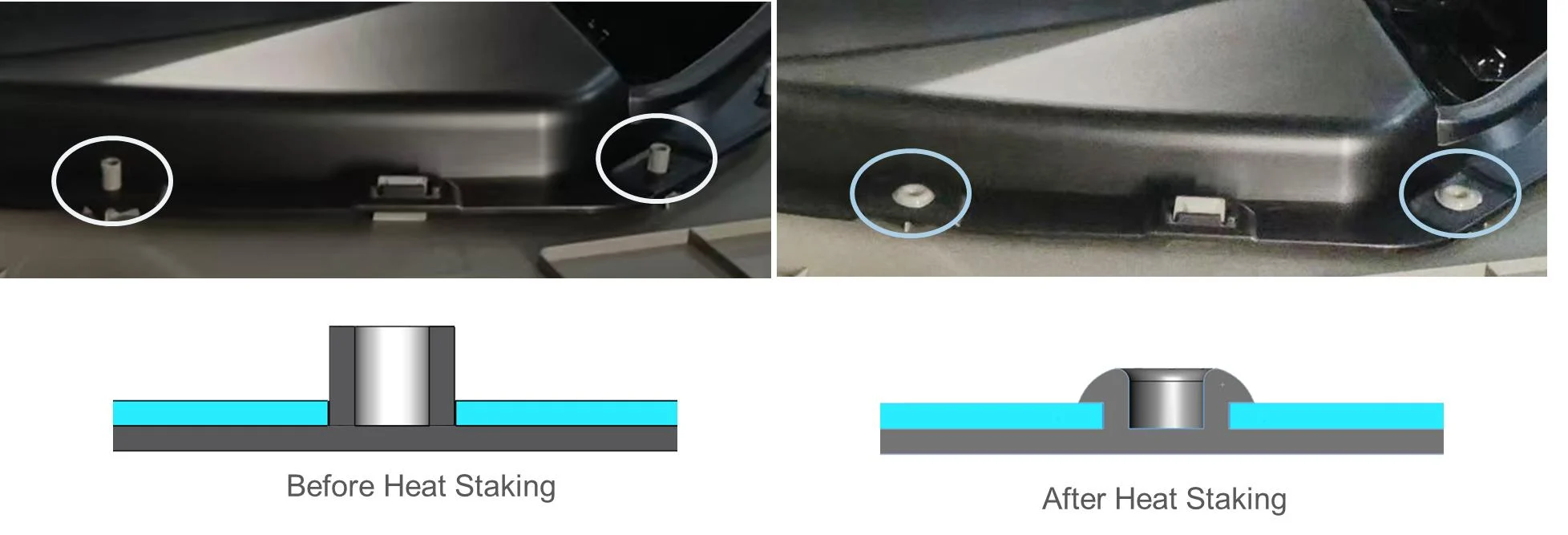
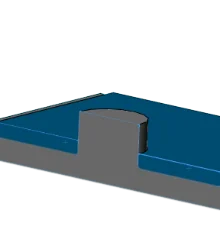
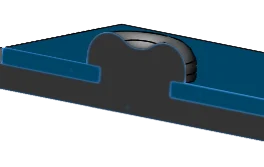
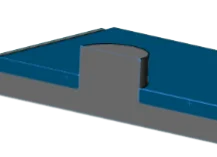
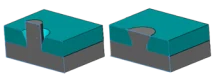
Plastic thermal staking (also known as heat staking or hot riveting) is a permanent fastening method used to join plastic parts to other plastic parts, or plastic parts to metal components and other materials. The basic principle is: a local protrusion (called a staking boss or stud) is designed on the plastic part, with a corresponding hole in the part to be assembled. The boss passes through the hole and is heated to soften or melt, then pressure is applied to reform it into a rivet head shape according to the tool design, and finally cooled to solidify, thereby securing the other part.
The essence of thermal staking leverages the property of thermoplastics that they can soften and flow when heated above their glass transition temperature (Tg) and return to solid state upon cooling, enabling permanent connections without adhesives, solvents, fillers, or additional fasteners.
How is the operation process of heat staking?
| Items | Ultrasonic Staking | IR Staking | Impulse Heat Staking | Electrical Heat Staking |
| Control System Cost | Medium (Ultrasonic Generator) | High, Infrared Power Circuit and Temperature Control Circuit | Medium-High, Pulse Generator & Temperature Control System | Lower, PID Electrical Power Supper Circuit + Temperature Control Circuit |
| Tooling Cost | High (Ultrasonic Converter/Booster/Horn) | High, Infrared Tooling including IR Lamp, Lens, Housing, Tooling, Temperature Sensor, etc | Medium-High,Staking tip requests special material and precision machining | Economical, the cost of single staking tip is low in average, normally is selected for multiple points staking. |
| Operation Efficiency | Normally 3~5S, including ultrasonic oscillation time & Cooling time | IR heating time and Cooling time, normally 15±5S | Normally less than 10S, pulse heating time including temperature rising time, melting time and | Normally 10~15S including melting time and cooling time |
| Staking Performance | Perfect, good outlook, no problem of loose in assembly after long time duration. | Good outlook, for low temperature staking, but needs to ensure enough cooling time. | Good for small points staking in both low temperature & high temperature, but need to pay attention to cooling control and tooling sticking. | Good for all size staking in both low temperature & high temperature, but need to pay attention to cooling control and tooling sticking. Hight temperature Staking flash impact outlook. |
| Staking Ability Size | High, normally Ø3~20mm | Limited, good for Ø 2~5mm | Limited, good for Ø 3~5mm | High, good for ≥3mm |
| Power Consumption | Medium, ultrasonic System normally 300~1200VA, but power consumption is only when ultrasonic works | Low, normally 50~150VA, only power consumption when IR lamp works | High, a single staking power about 1000~3000VA, but only power consumption when pulse system works. | Low, a single staking tooling power normally 50~200VA, higher power consumption during melting, and lower consumption for keep temperature in range after melting. |
| Selection | Can be applied on handheld type machine, robotic work station or multi-heads machine table operation | Good for multiple heads machine table operation | Good for both handheld type machine and multiple heads machine table operation | Normally only operates on machine table, especially for multiple points staking. |
V. Control-Principle of Heat Staking Equipment
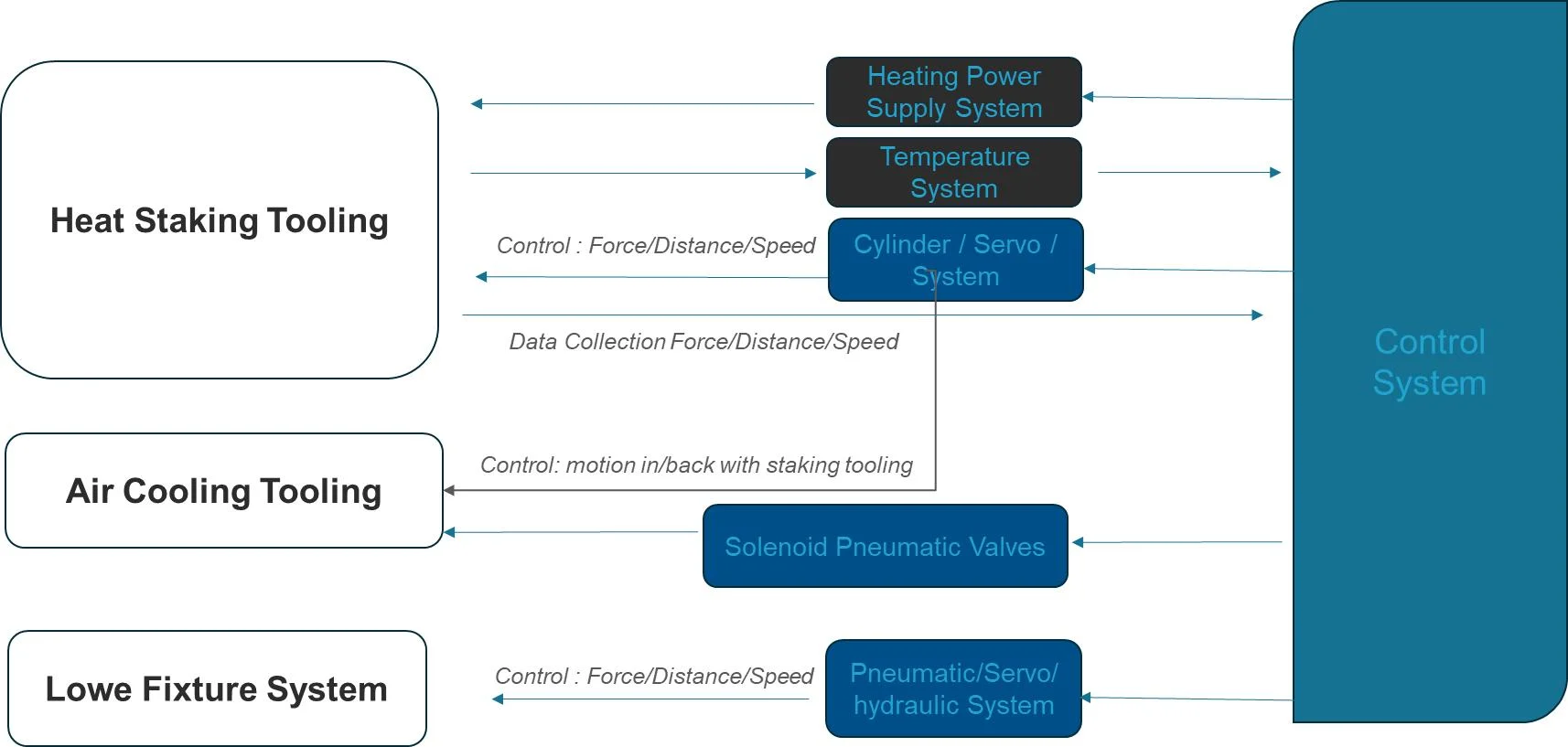
How is the heat staking equipment system like?
The critical control to heat staking including:
| Pneumatic Cylinder | Booster-Cylinder | Servo Motor System | |
| Force Control | By pressure regulators, difficult to realize double or multiple steps force control | By regulators, can realize double steps force control | By motor torque output control, easy realize multiple steps force control. |
| Motion Control | By buffer or mechanical stopper, low depths precision control | By buffer or mechanical stopper, low depths precision control | By servo system control in high precision. |
| Motion Speed control | Low accuracy control to speed, normally controlled by throttle valve. | Low accuracy control to speed, normally controlled by throttle valve. | Controlled by servosystem high accuracy |
| Loading Ability | Low, normally applied for small heat staking tooling | High, no limit is staking tooling weight | High, no limit is staking tooling weight |
| Cost | Economical | Little higher than Pneumatic cylinder type | High |
| Application | For small parts staking without high precision control; normally high temperature heat staking | Normally applied for low temperature staking | Suitable for both high temperature staking and low temperature staking, mostly selected for big parts staking or staking requests high precision control. |
VI. High Temperature Heat Staking VS Low Temperature Heat Staking
What is high temperature heat staking and low temperature heat staking? What is the difference? And how to select the temperature of heat staking?
High-strength thermoplastic riveting process that uses a thermal tip at 220–450°C to melt and form plastic studs into permanent, load-bearing rivets. It features fast forming cycles, strong shrink clamping force, and compatibility with high-melting engineering plastics, designed for heavy-duty industrial and automotive applications where joint durability and mass production efficiency are critical.
Low-Temperature Heat Staking, a precision thermoplastic joining process operating at 120–210°C, with a low-power constant-temperature tip that delivers gentle, controlled heating. It creates an extremely small heat-affected zone, preserves the original surface finish of workpieces, and causes no thermal damage to heat-sensitive components, making it ideal for precision electronics, medical parts, and thin-wall plastic products with strict appearance requirements.
| Comparative Analysis: High-Temperature vs Low-Temperature Heat Staking | ||
| 1. Core Technical Parameters | ||
| Parameter | High-Temperature Heat Staking | Low-Temperature Heat Staking |
| Working temperature range | 220–450 °C | 120–210 °C |
| Heating method | Electric thermal tip direct conduction / hot air convection | Low-power constant-temperature thermal tip, soft contact heating |
| Heating cycle | 1.5–5 s heating; 2–4 s cooling holding | 3–8 s heating; 3–6 s cooling holding |
| Pressure range | 0.3–0.8 MPa | 0.1–0.4 MPa |
| Heat-Affected Zone (HAZ) | 2–3.5 mm around the plastic stud | 0.8–1.6 mm around the plastic stud |
| Temperature control precision | ±8–15 °C | ±3–6 °C |
| 2. Advantages | ||
| Advantage Item | High-Temperature Heat Staking | Low-Temperature Heat Staking |
| Production efficiency | Fast forming cycle, high efficiency for mass automation lines | Longer heating/cooling cycles, lower production throughput |
| Joint strength | Strong rivet shrink clamping force; superior vibration/thermal cycling resistance | Weak shrink clamping force; poor performance under severe vibration/extreme temperature swings |
| Material compatibility | Compatible with high-melting-point engineering plastics | Only compatible with low/medium-melting thermoplastics |
| Equipment requirement | Less strict demand for preheating auxiliary equipment | Higher requirement for precise temperature/pressure closed-loop control |
| Workpiece protection | High risk of thermal damage to sensitive components | Minimal HAZ, preserves original surface finish; safe for precision parts |
| Energy consumption | Higher energy consumption; faster thermal tip wear | Lower energy consumption; longer heating tip service life |
| Surface quality | Risk of over-melting, flash, stringing on thin studs | Smooth, burr-free rivet heads, zero post-processing needed |
| 3. Disadvantages | ||
| Disadvantage Item | High-Temperature Heat Staking | Low-Temperature Heat Staking |
| Thermal damage risk | Large HAZ; easy to cause discoloration, warpage, sink marks on thin-wall parts | Low thermal stress; effectively avoids plastic warpage/deformation/discoloration |
| Component safety | High risk of damaging nearby sensitive electronic components (PCB, micro-sensors) | Safe for precision electronics, fragile thin-wall plastic, heat-sensitive assemblies |
| Material limitation | Cannot process low-melting plastics prone to thermal deformation | Cannot process high-melting plastics or thick large-diameter studs |
| Equipment cost | Lower equipment procurement cost | Higher equipment cost due to high-precision control requirements |
| Production capacity | High production throughput | Lower production throughput due to longer cycle time |
| 4. Applicable Materials | ||
| Material Type | High-Temperature Heat Staking | Low-Temperature Heat Staking |
| Engineering thermoplastics | High-melting grades: PBT, PA66, PA6T, PC+GF, PET, PPS | Low/medium-melting grades: PP, ABS, PC, TPU, PE, PMMA |
| Stud specification | Thick, large-diameter studs (diameter ≥3 mm) | Thin-wall, thin studs (diameter ≤2.5 mm) |
| Filled plastics | High content glass fiber/mineral powder filled plastics | Unfilled or low-filler-content plastics prone to thermal deformation |
| Special materials | Plastic-metal composite assemblies with thick plastic substrates | Transparent plastics requiring zero surface haze/discoloration |
| 5. Application Scenarios | ||
| Application Field | High-Temperature Heat Staking | Low-Temperature Heat Staking |
| Automotive industry | Structural plastic parts: door panels, bumper brackets, motor housing assemblies | Precision interior components with strict appearance requirements |
| Electronics industry | Heavy-load electronic modules: new energy battery brackets, PCU housings | Consumer electronics: smart watch housings, mobile phone middle frames, camera modules |
| Appliance industry | Large household appliance structural components: washing machine frames, air conditioner brackets | Small precision home appliance parts |
| Medical industry | Heavy-duty medical device structural parts | Disposable precision medical parts: surgical instrument components, transparent medical casings |
| Industrial fixtures | Industrial mechanical plastic fixtures requiring long-term vibration resistance | PCB integrated assemblies with micro chips, sensors and fragile wiring |
| Consumer goods | Large plastic structural parts | Thin-wall cosmetic packaging, transparent plastic decorative parts, wearable device components |
| 6. Selection Guidance | ||
| Selection Condition | Choose High-Temperature Heat Staking | Choose Low-Temperature Heat Staking |
| Core requirement | High joint strength, fast cycle time, heavy-duty performance | Heat-sensitive parts, strict surface appearance standards, precision components |
| Material type | High-temperature-resistant engineering plastics | Low/medium-melting thermoplastics, transparent/thin-wall plastics |
| Application scenario | Automotive, industrial, large appliance structural parts | Consumer electronics, medical precision parts, wearable devices, PCB assemblies |
V.Classification by Boss Structure
How to select heat staking? And what should we pay attention to when we design thermal staking?
| Plastic Riveting Boss Types, Applications and Design Parameters Specification Table | |||
| Boss Type | Design Reference Diagram | Typical Application | Key Design Parameters |
| Solid Boss (Solid Rivet Stud) |
![]() |
The most universal riveting type, applicable to studs with diameter ≤3mm; commonly used in low-strength scenarios such as PCB boards and plastic decorative parts | Stud size ≤ 2/3 of the part wall thickness, maximum diameter ≤3mm; recommended stud protrusion height is 1.5~1.75 times the stud diameter |
| Hollow Boss (Hollow Rivet Stud) |
![]() |
Applicable to large studs with diameter >4mm; avoids sink marks on the back of the product, suitable for thin-walled plastic parts | Stud diameter >4mm; recommended wall thickness range 0.75~2.0mm; riveting volume calculated as S_head=(85%~95%)*S_stud |
| Knurled/Flat Head (Knurled/Flat Head Rivet Stud) | ![]() |
Applicable to small studs with diameter <4mm; suitable for high-melting-point, easily degradable plastics to avoid thermal damage | Stud diameter D1<4mm; rivet head diameter D2≈1.5 times D1, rivet head height H2≈0.5 times D1; stud protrusion height H1≈1.0`1.5 times D1 |
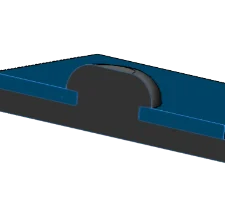
| Dome/Round Head (Semi-circular/Round Head Rivet Stud) |
![]() |
Applicable to small studs with diameter <1.6mm; suitable for high-melting-point, easily degradable plastics to avoid thermal damage | Stud diameter D1<1.6mm; rivet head diameter D2≈1.5 times D1, rivet head height H2≈0.5 times D1; stud protrusion height H1≈1.0 times D1 |
| Double Dome Head (Double Semi-circular Head Rivet Stud) |
![]() |
Applicable to studs with diameter >1.6mm; aesthetic appearance, similar to blind rivets, for scenarios requiring high riveting strength | Stud diameter D1>1.6mm (recommended 2~5mm); rivet head diameter D2≈2 times D1, rivet head height H2≈0.5 times D1; stud protrusion height H1≈1.5 times D1 |
| Rib-type Boss (Rib-reinforced Rivet Stud) | ![]() |
Scenarios with limited installation space but high fastening strength required; improves the pull-out strength of the stud through reinforcing ribs | Reinforcing ribs are designed at the root of the stud, recommended rib thickness ≤60% of the part wall thickness; stud diameter refers to the corresponding solid/hollow rivet stud specifications |
| Counterbore Staking (Countersunk Riveting) | ![]() |
Scenarios with strict requirements for surface flatness; after riveting, the rivet head is fully sunk into the counterbore, with no protrusion on the surface | The mating part shall be designed with a matching counterbore; stud diameter D1<3mm; stud protrusion height H1≈0.5 times D1; rivet head volume calculated as S head = (85%~95%)*S stud |
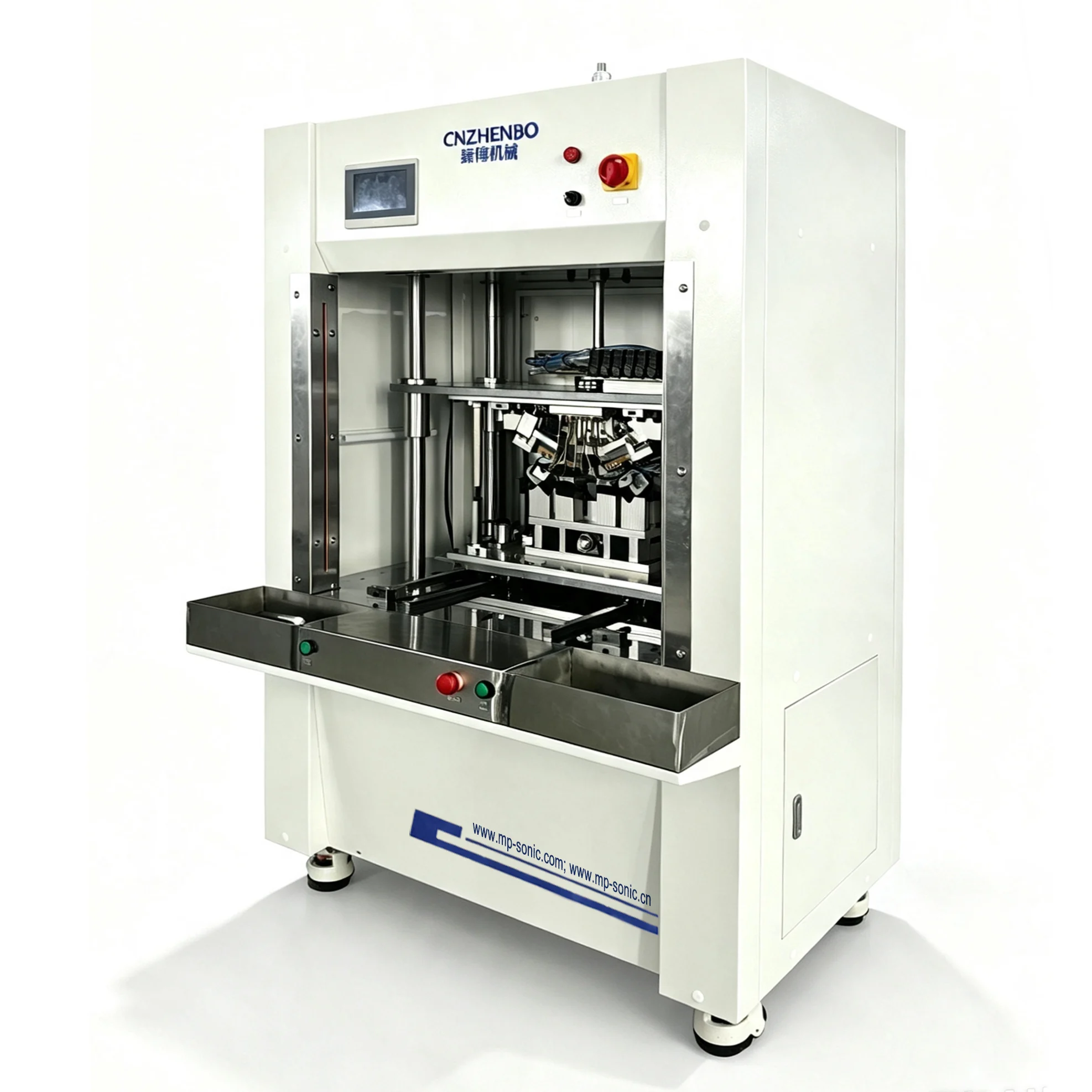
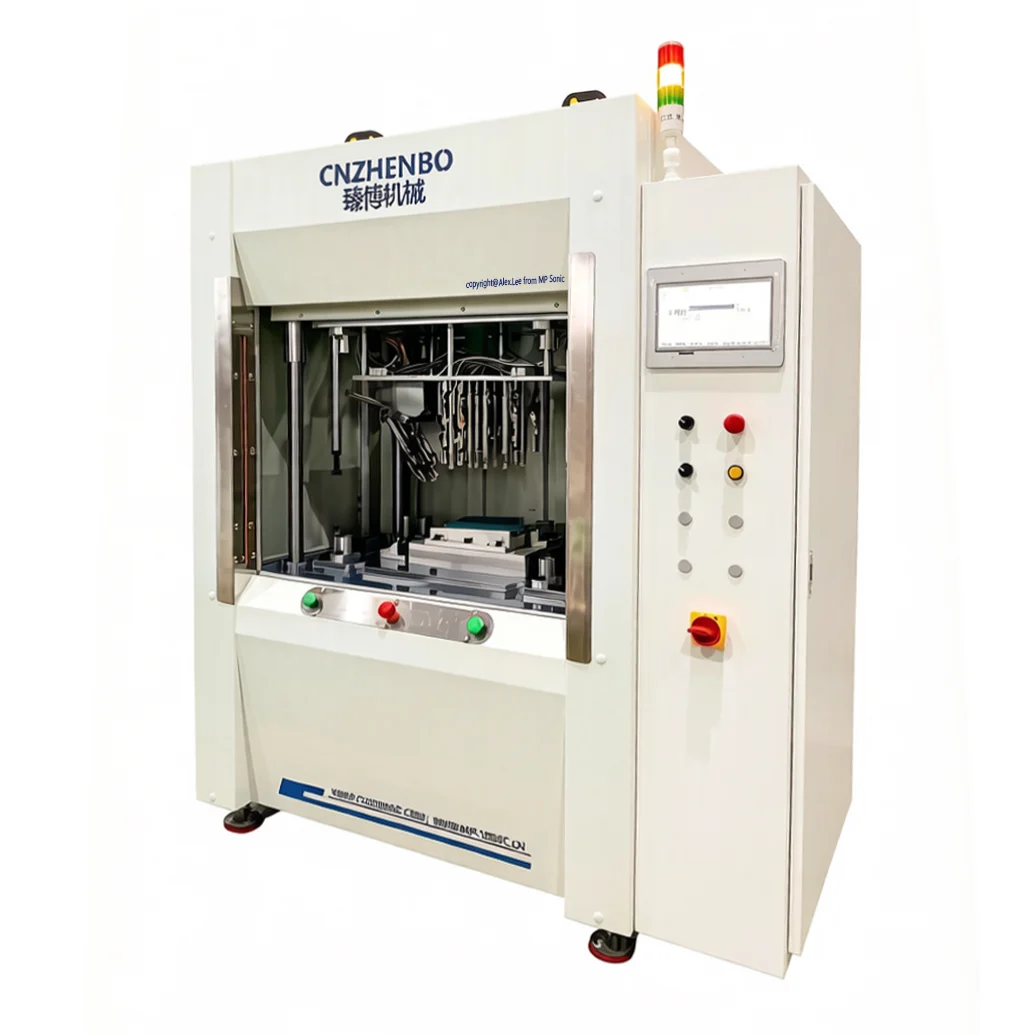
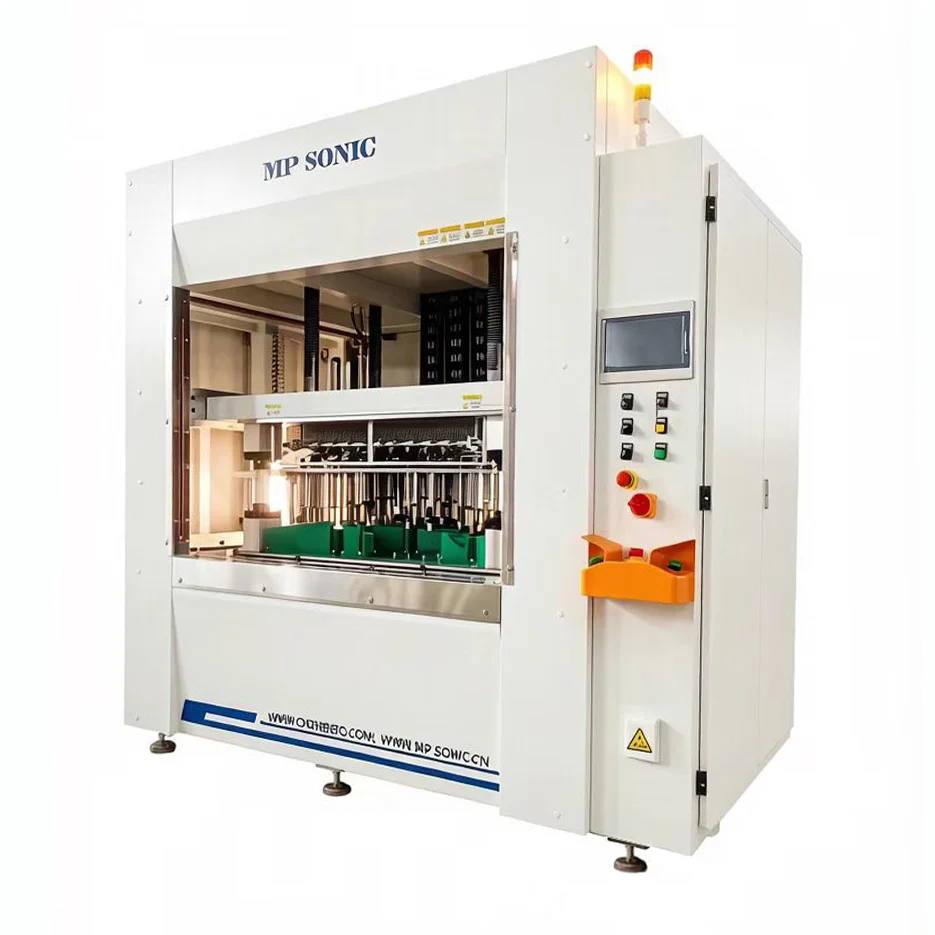
Heat staking machine applies electrical heating to melt thermoplastic prober and form staking under pressure achieving parts assembly in strength. Machine can be applied for automotive interior trim, PCB of lamps, home appliance assembly, electronics, etc.
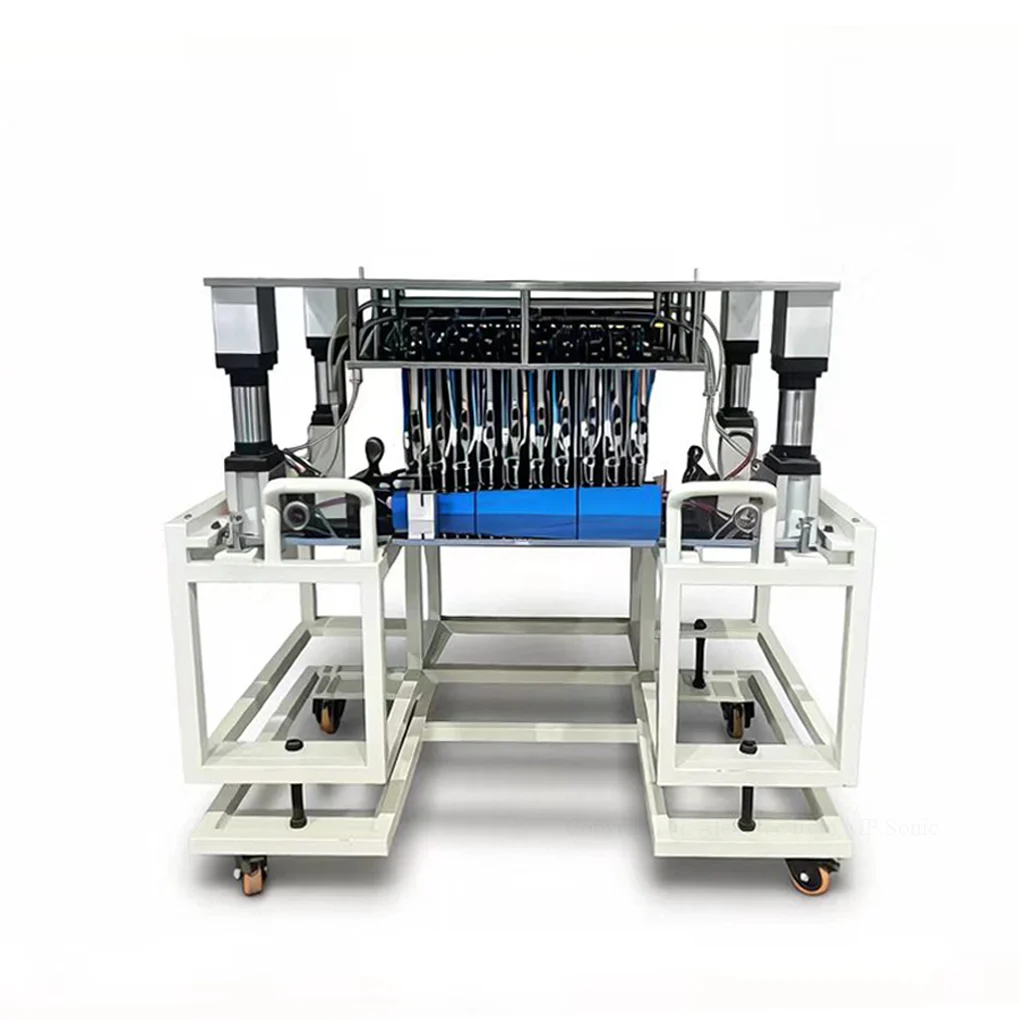
MP Sonic designed servo heat staking machine applied servo motor system to control the staking action and force pressure during operation. It is mostly applied for the riveting assembly of parts in big size, especially such as automotive door trim production.
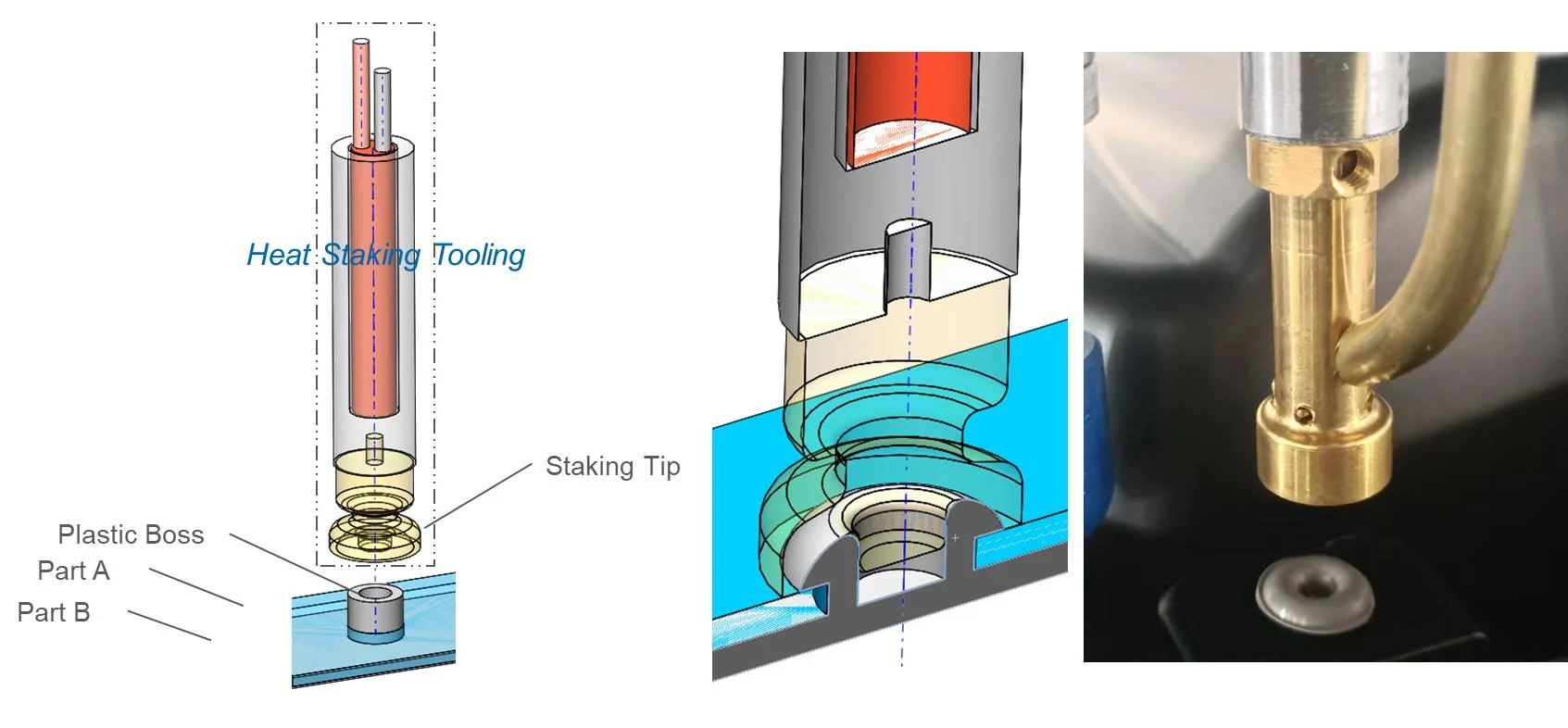
Thermal staking tooling, means the tooling for thermoplastic heat riveting, is an essential equipment to realize assembly by thermal staking. Heat staking tooling is designed according to work-pieces design. The cost of tooling depends on work-pieces measurement, geometric design and no of staking points as well as heater design.