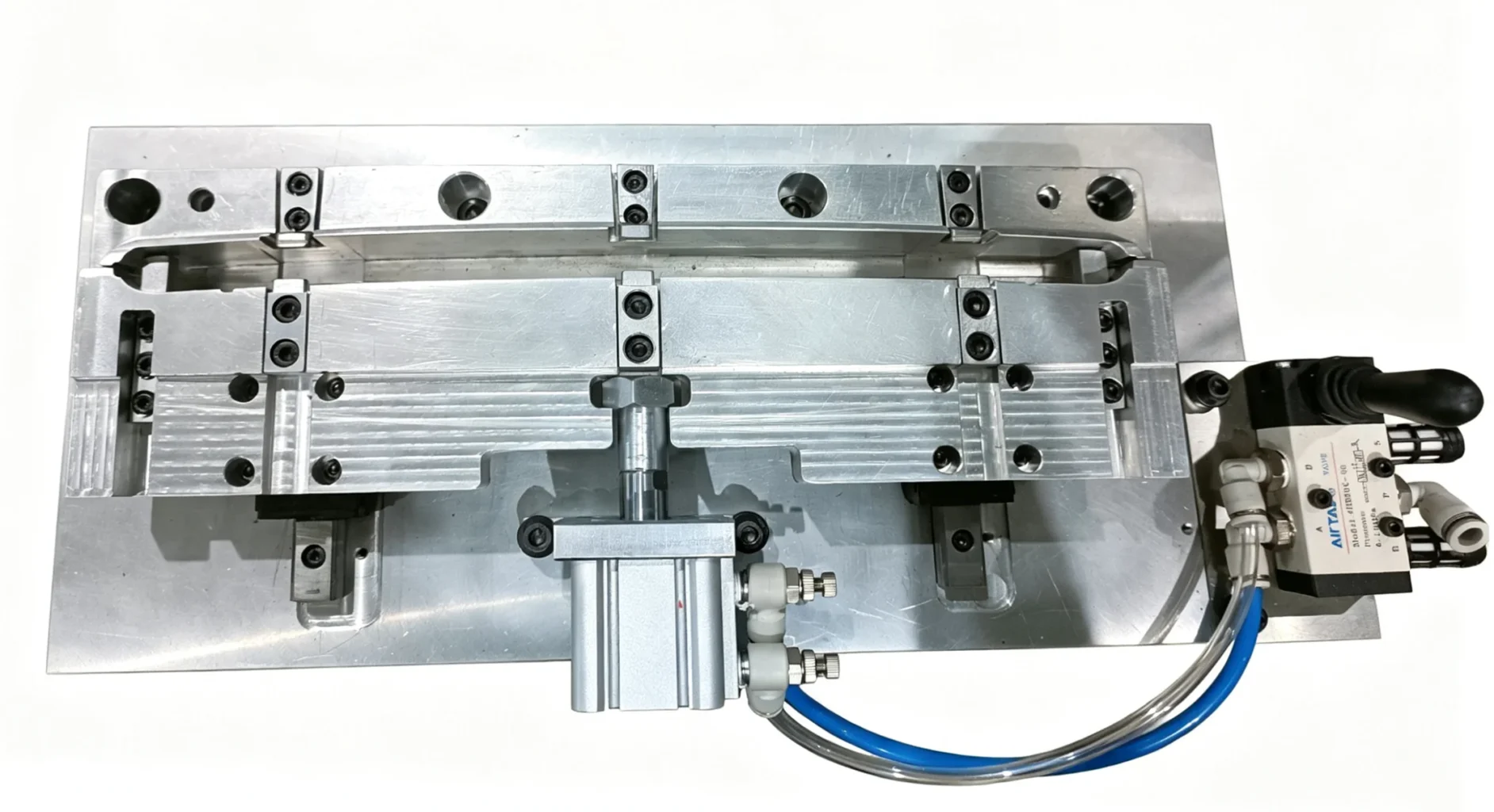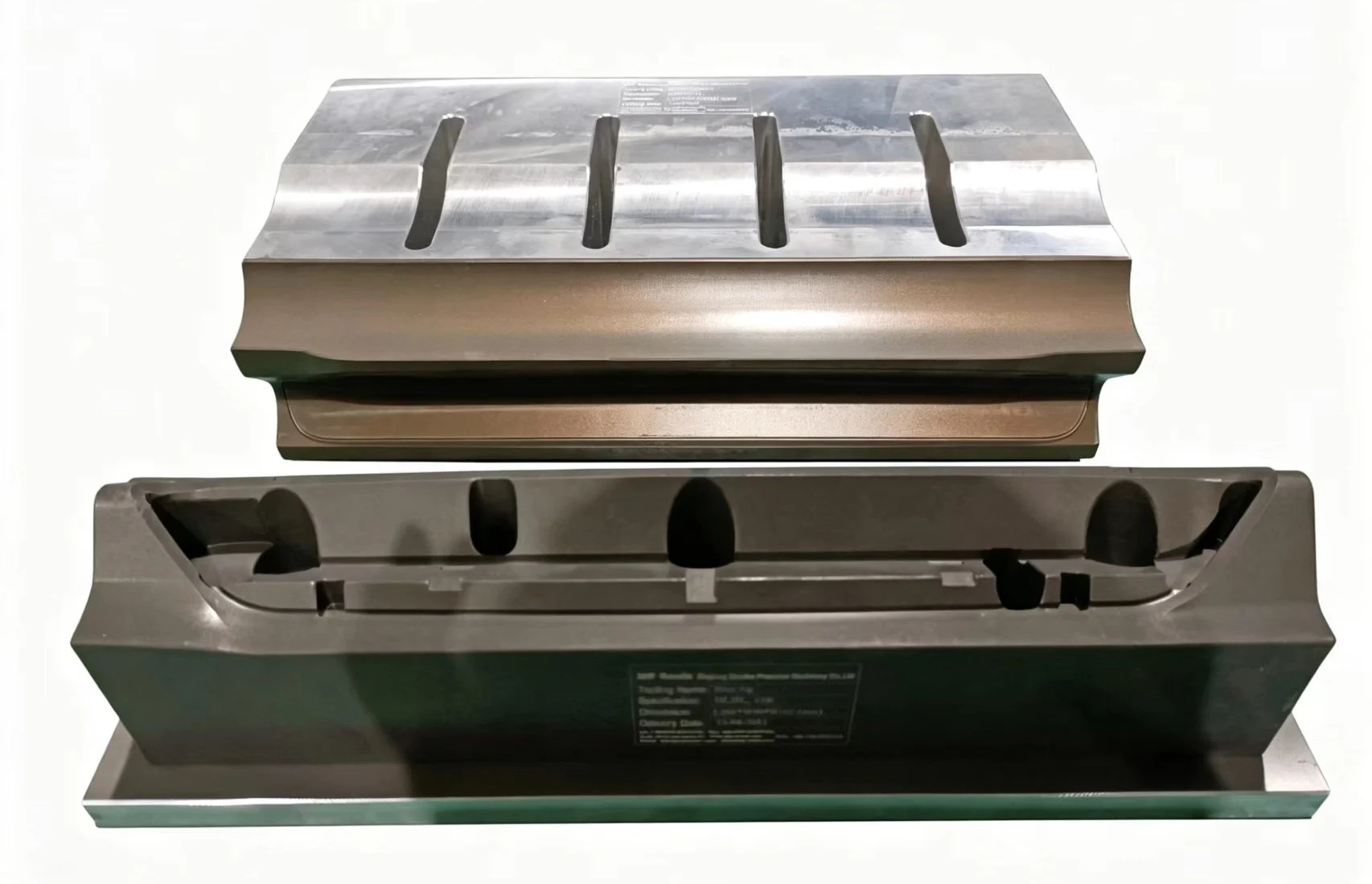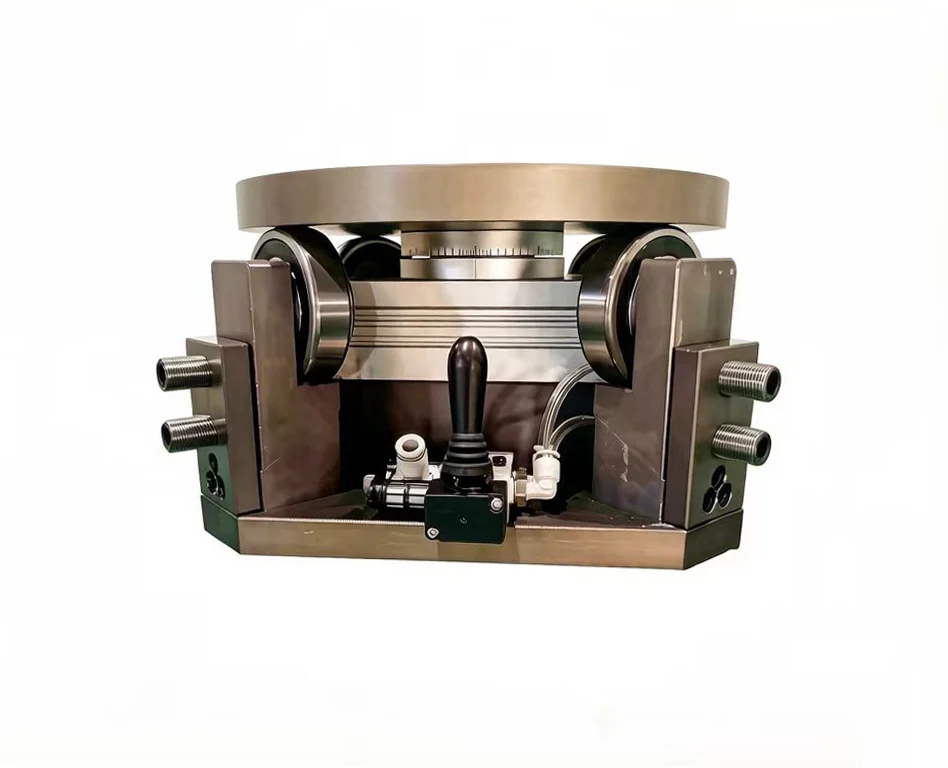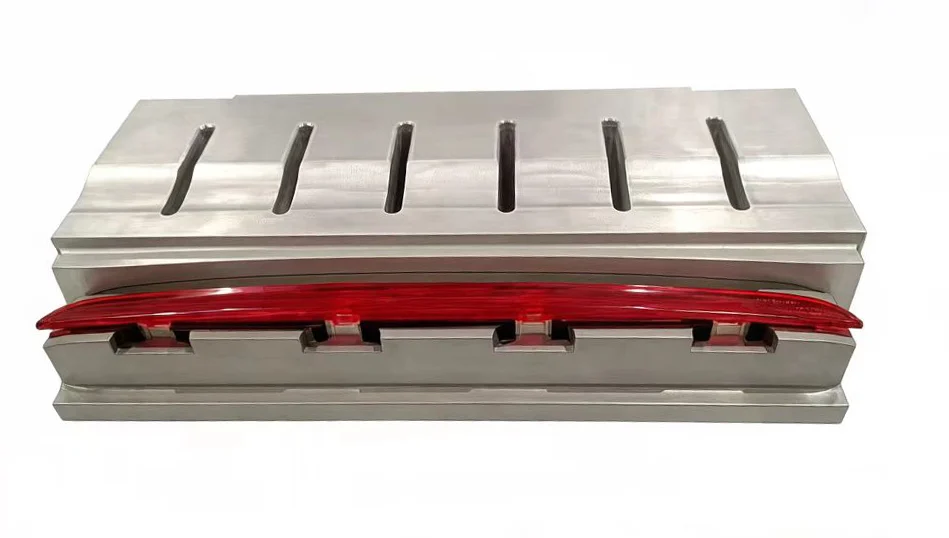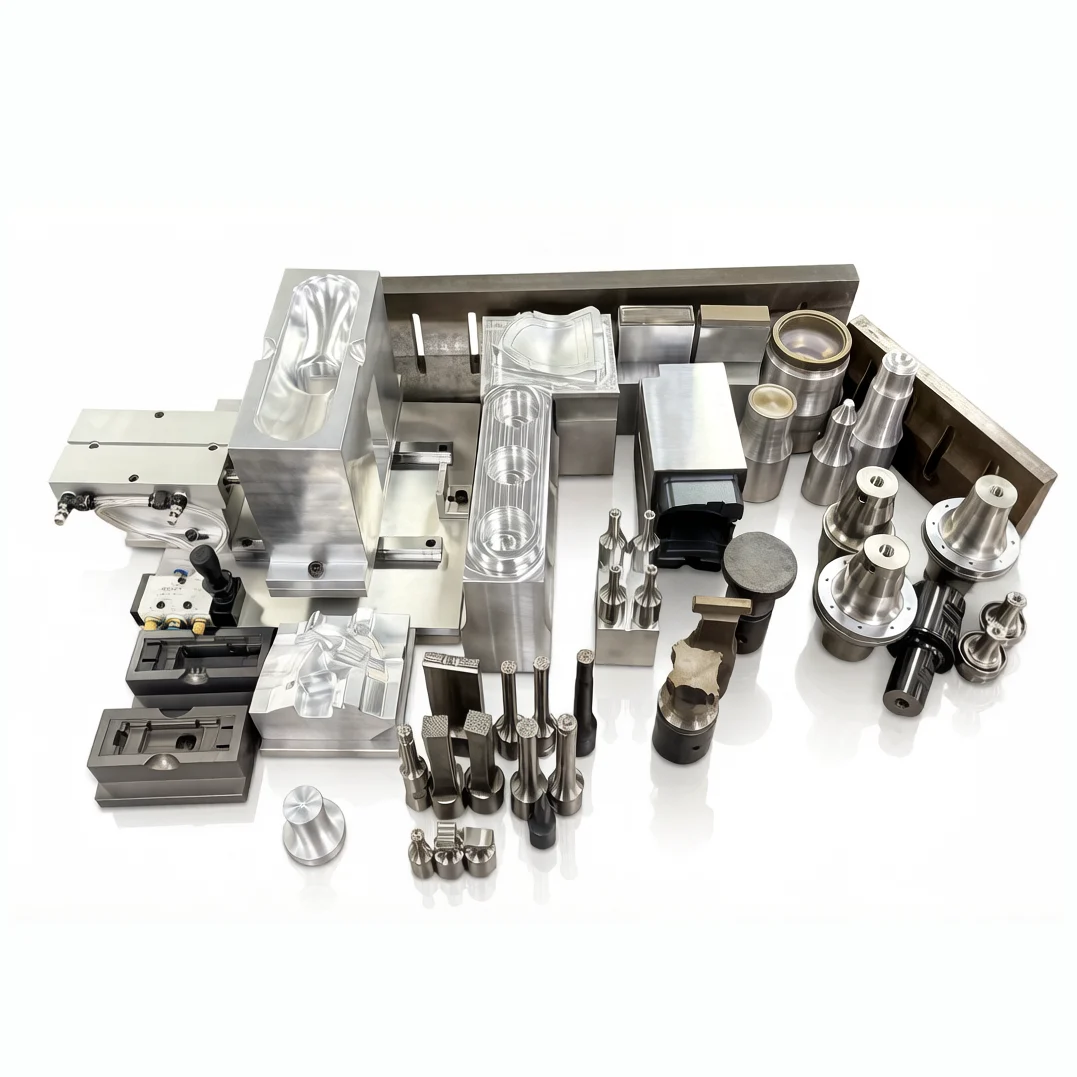
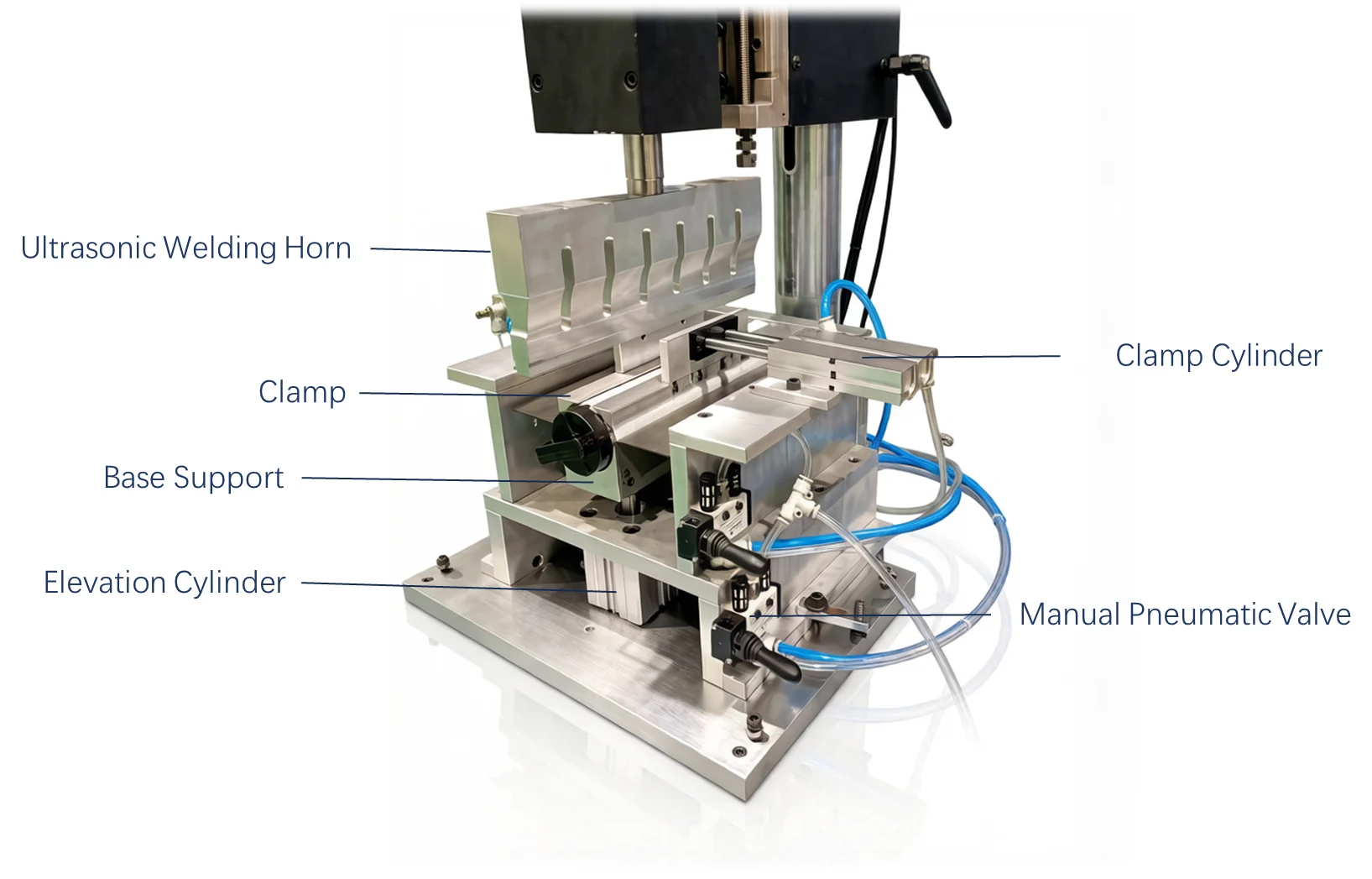
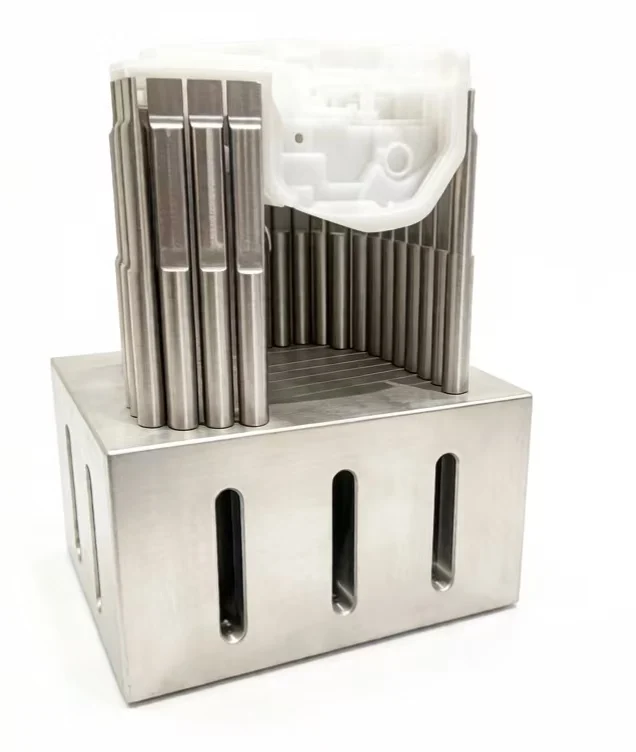
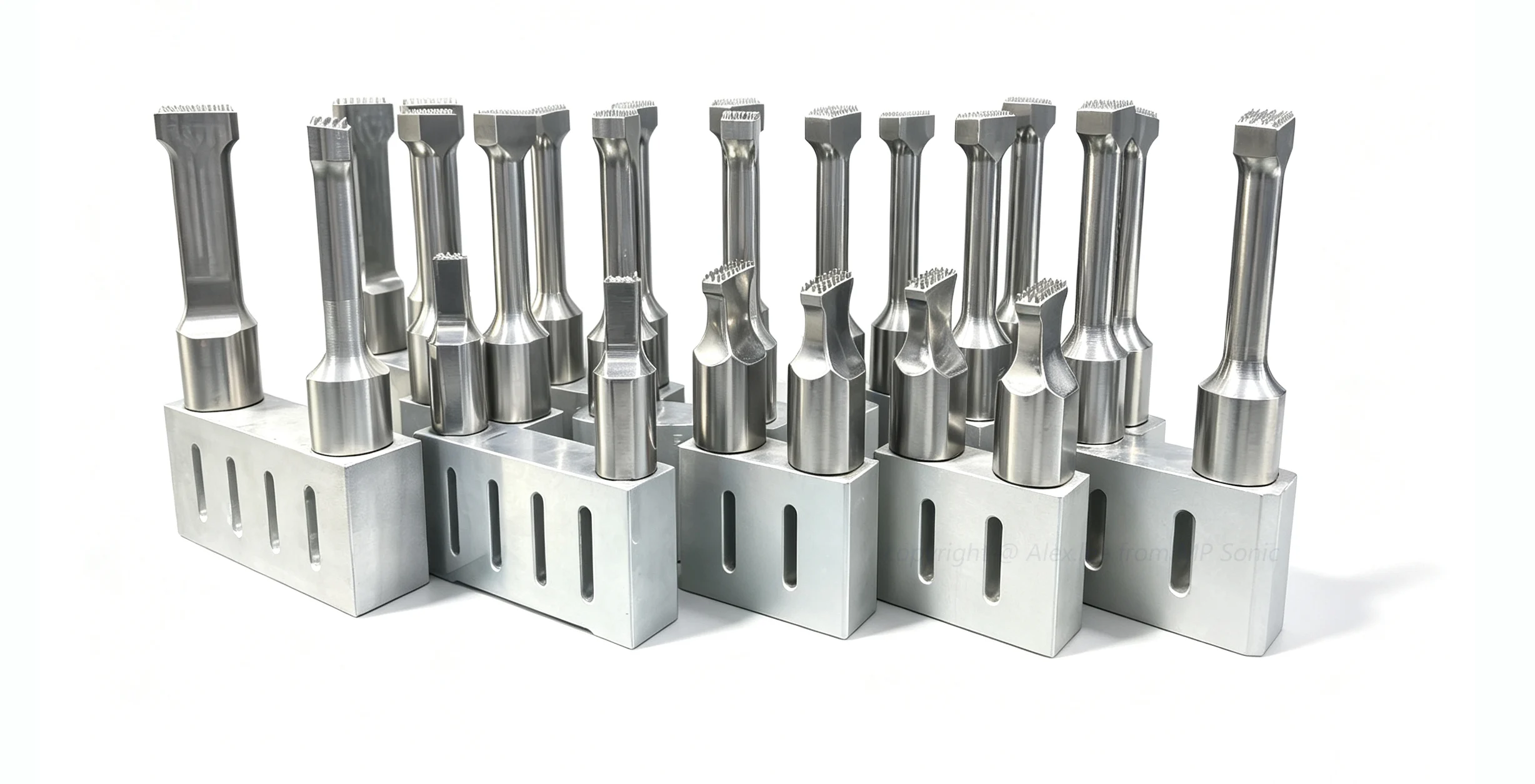
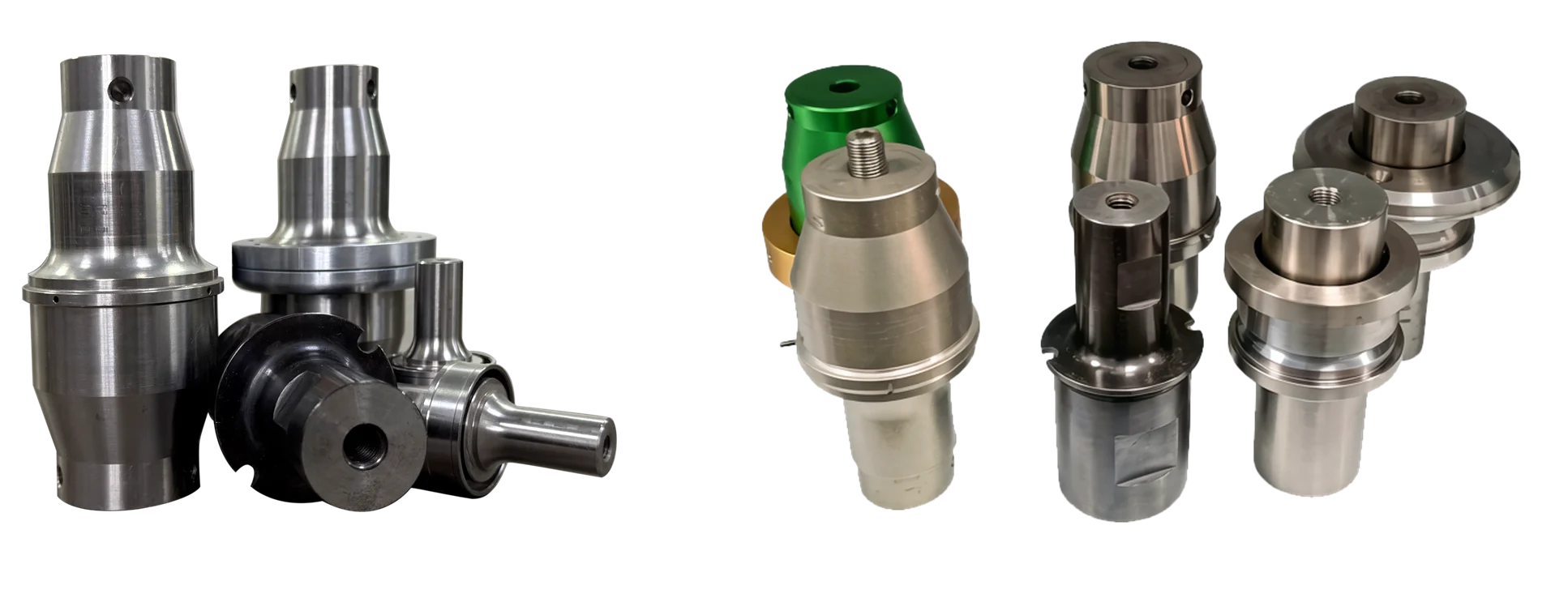
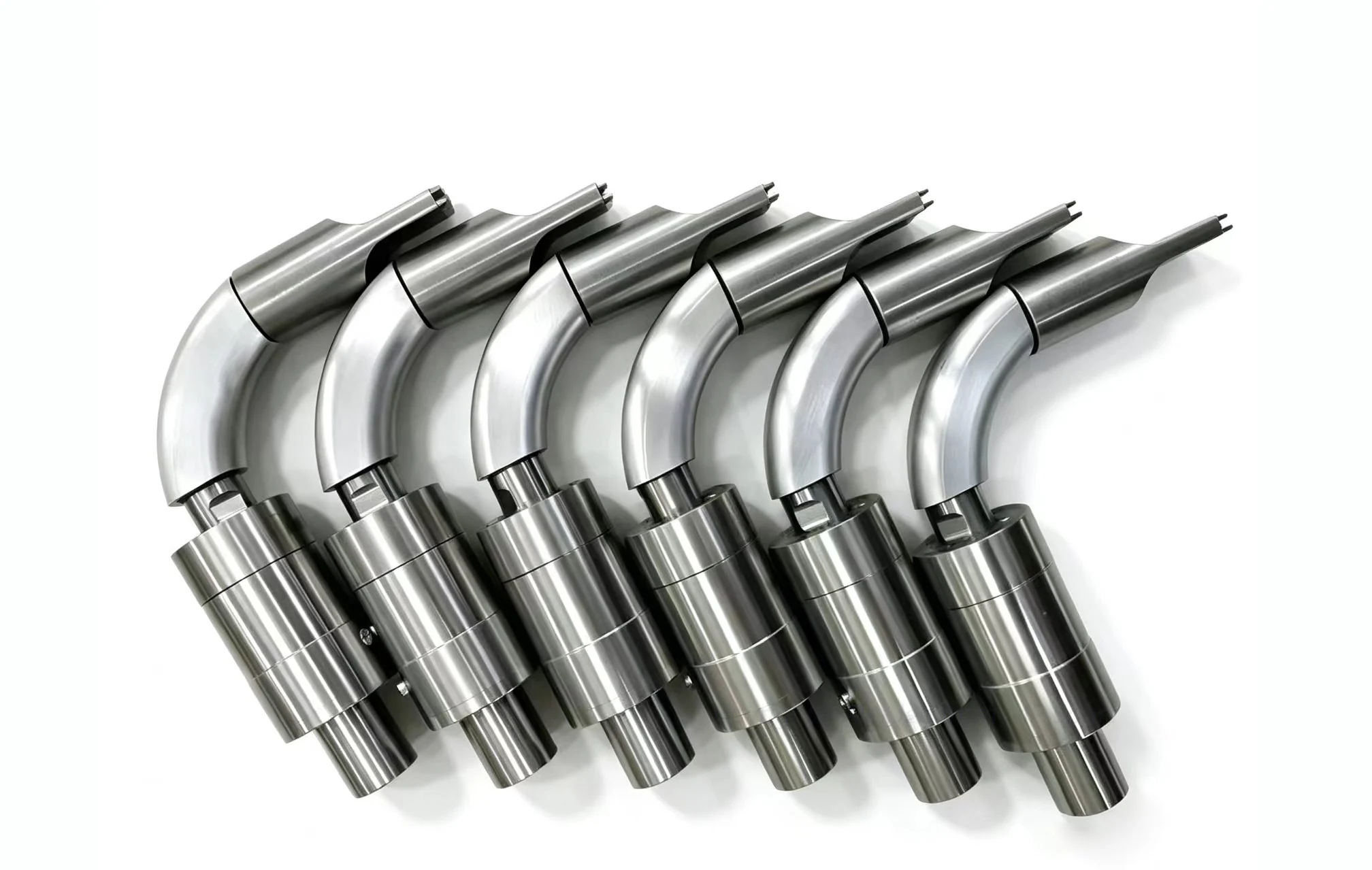
Ultrasonic welding tooling includes ultrasonic welding horn, booster, base fixture as well as auxiliary tool such as clamps, sliders, vacuum system, turning system in case in need. Ultrasonic welding tooling should be designed according to requirement in detail.
I. Ultrasonic Horn
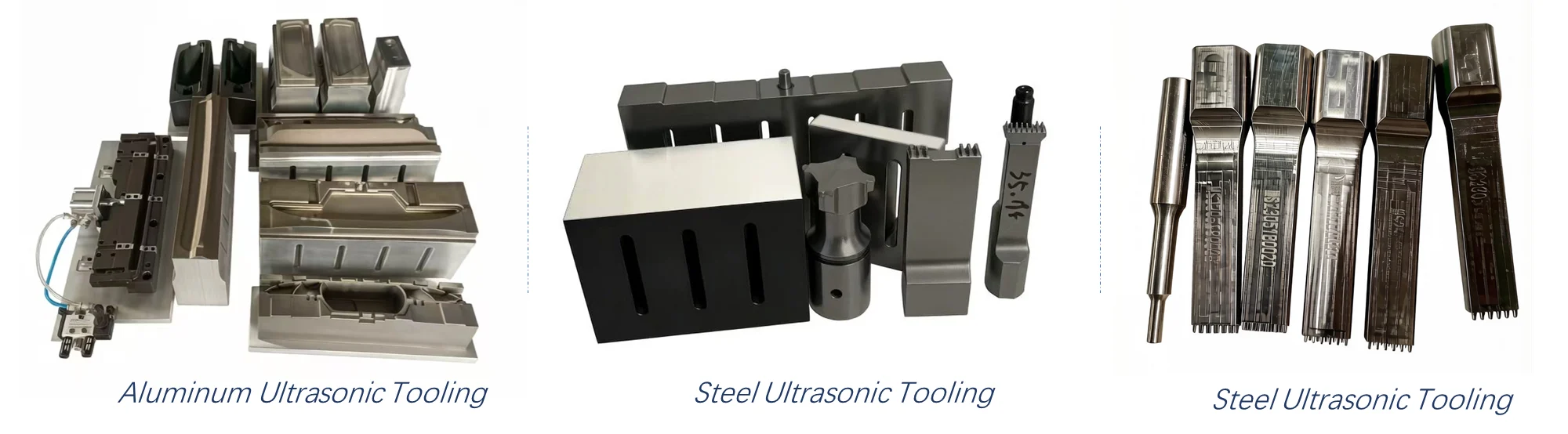
Ultrasonic horn welding normally made of aluminum, steel or titanium according to requirement.
| Material Type | Representative Grades | Key Advantages | Main Disadvantages | Suitable Materials & Conditions |
| Aluminum Alloy | 6061, 7075 | 1. Excellent acoustic conductivity (low amplitude loss); 2. Lightweight, fast machining, low cost; 3. Quick start-up; minimizes product discoloration | 1. Low hardness, poor wear resistance, short lifespan; 2. Prone to sticking to plastic; 3. Unsuitable for high-power or continuous operation | • Pure plastics (ABS, PC, PS, Acrylic, etc.); • Thin-walled small parts; • Low-frequency, small-batch production |
| Titanium Alloy | TC4 (Ti-6Al-4V), GR5 | 1. Best overall performance, stable acoustics; 2. High strength, fatigue & heat resistant; 3. Good wear resistance (3–5x lifespan of aluminum); 4. Non-stick, low heat generation | 1. Higher material cost than aluminum; 2. Difficult to machine; 3. longer lead time | • General plastics (PP, ABS, PC, Nylon, etc.); • Glass-filled modified plastics; • Long-term mass production |
| Tool Steel | Cr12MoV, SKD11, D2, H13 | 1. Extremely high hardness, best wear resistance; 2. Resists glass fiber erosion & scratching; 3. High-temperature resistant, non-deforming | 1. High acoustic loss, heavy weight; 2. Lower amplitude under same power; prone to heating; 3. Longest machining cycle, most expensive | • High GF/CF reinforced plastics (GF ≥ 30%); • Hard plastics, thick-walled large parts; • High-friction, high-pressure, long-duration welding |
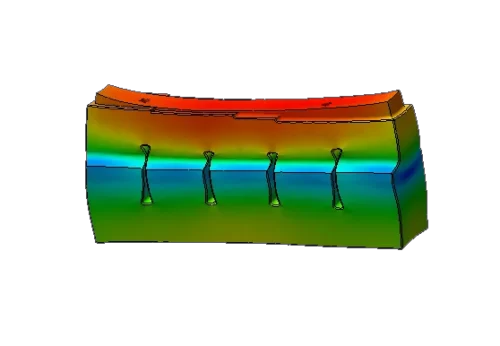
The key notice to ultrasonic horn design and manufacture besides material:
II. Ultrasonic Booster
Ultrasonic booster designed with a definite gain according to work parts material, dimension and geometric design as well as ultrasonic system power to achieve excellent welding result. The use of booster is: 1. enhance the ultrasonic wave amplitude and transmits to ultrasonic horn which aims enhance ultrasonic output strength; 2. for the mounting of ultrasonic welding unit in some application.
Ultrasonic booster normally made from aluminum, titanium or steel.
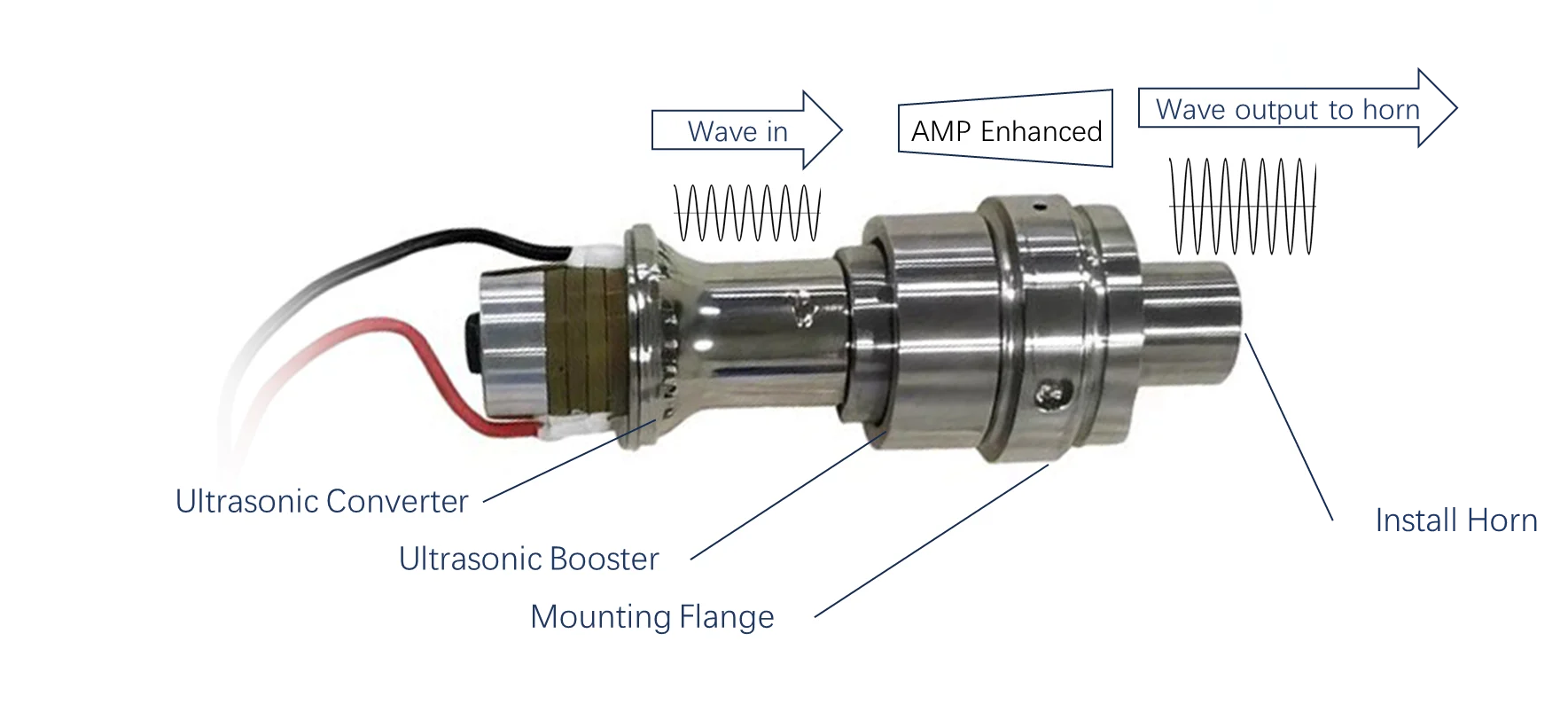
Ultrasonic Booster Work Principle
III. Base Fixture