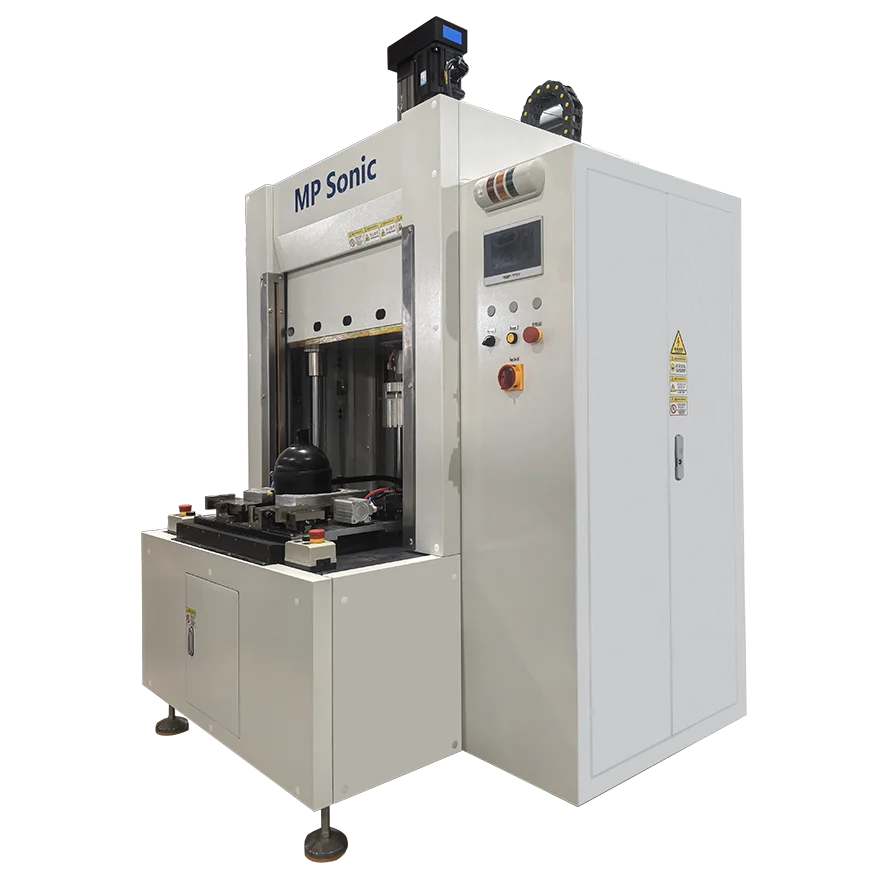
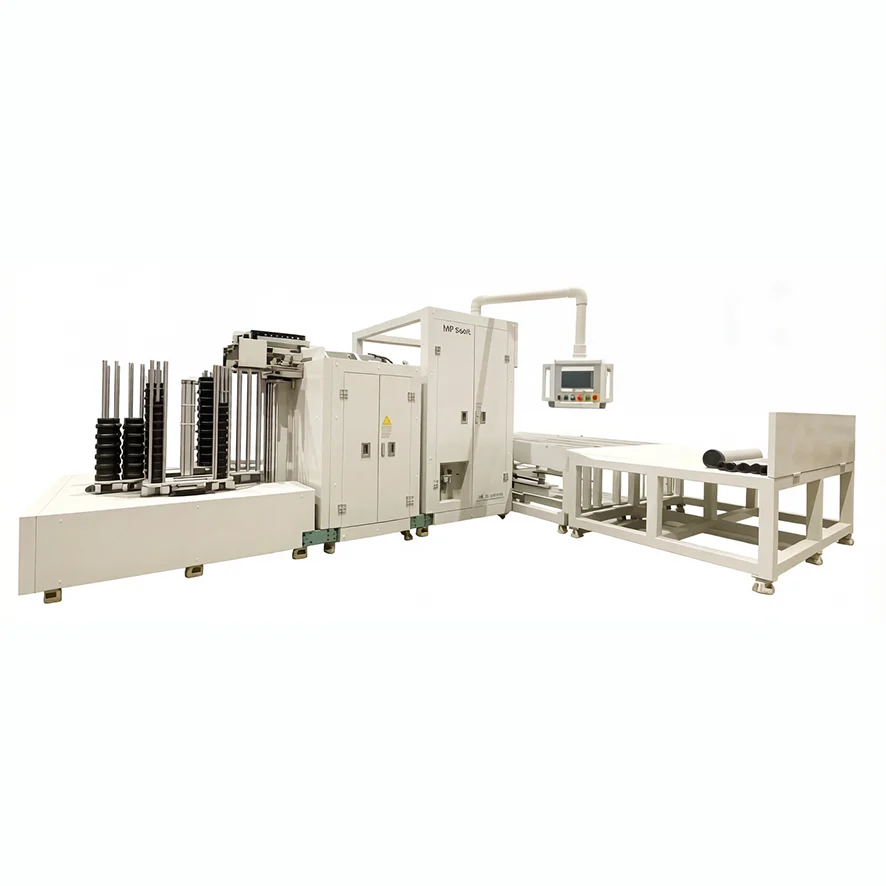
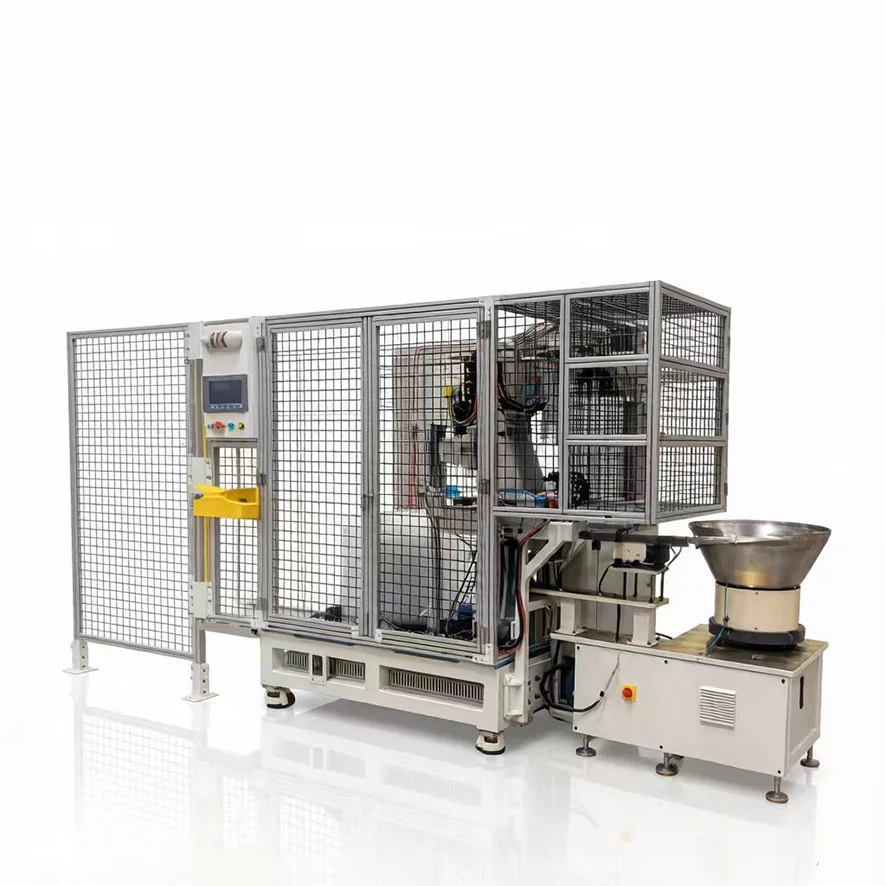
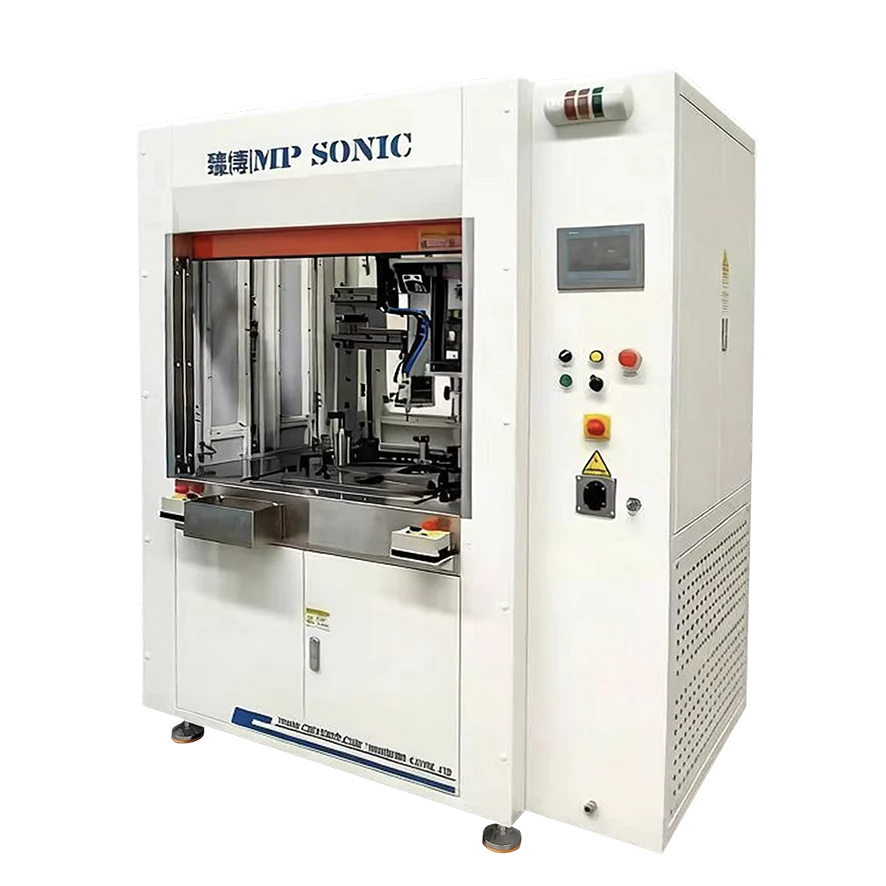
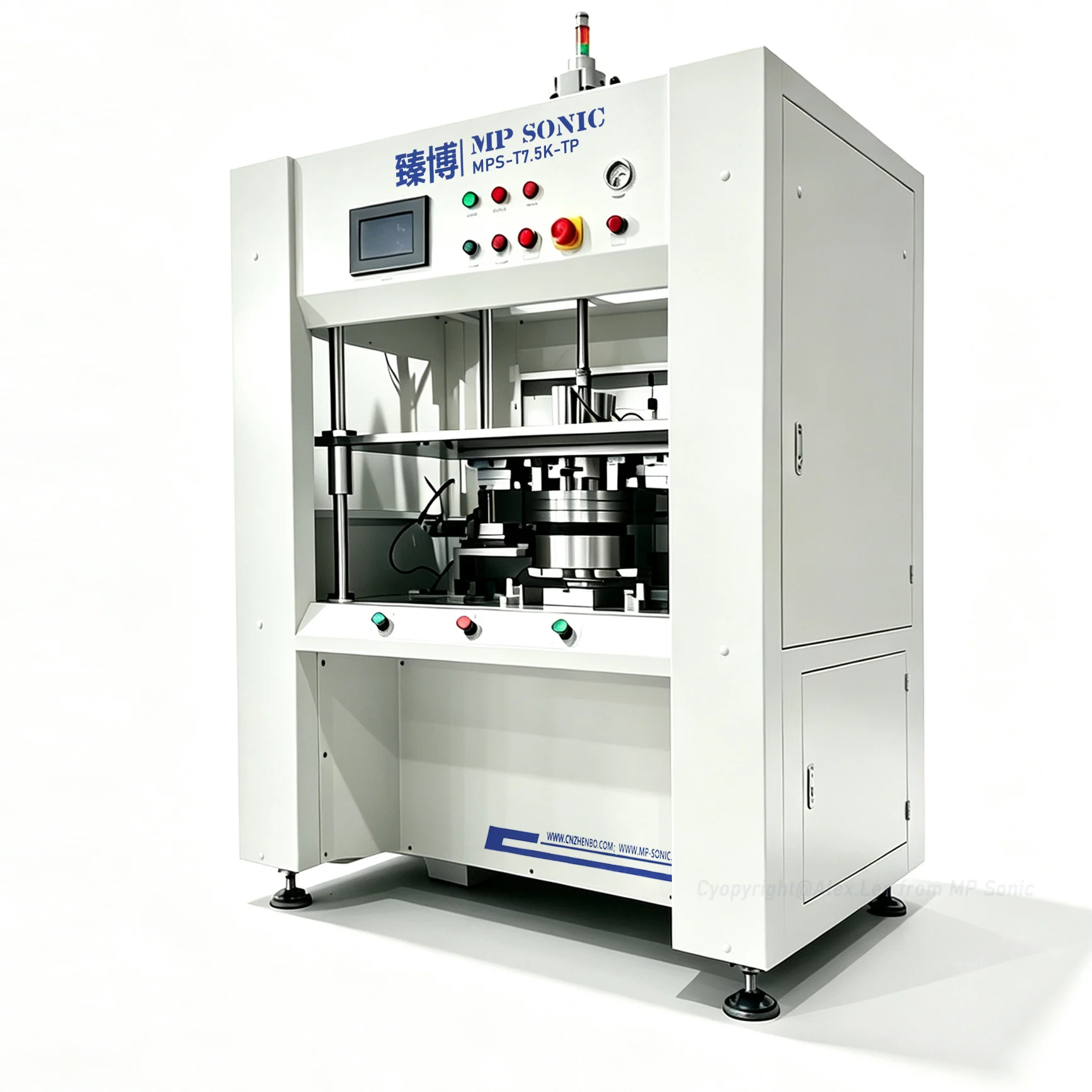
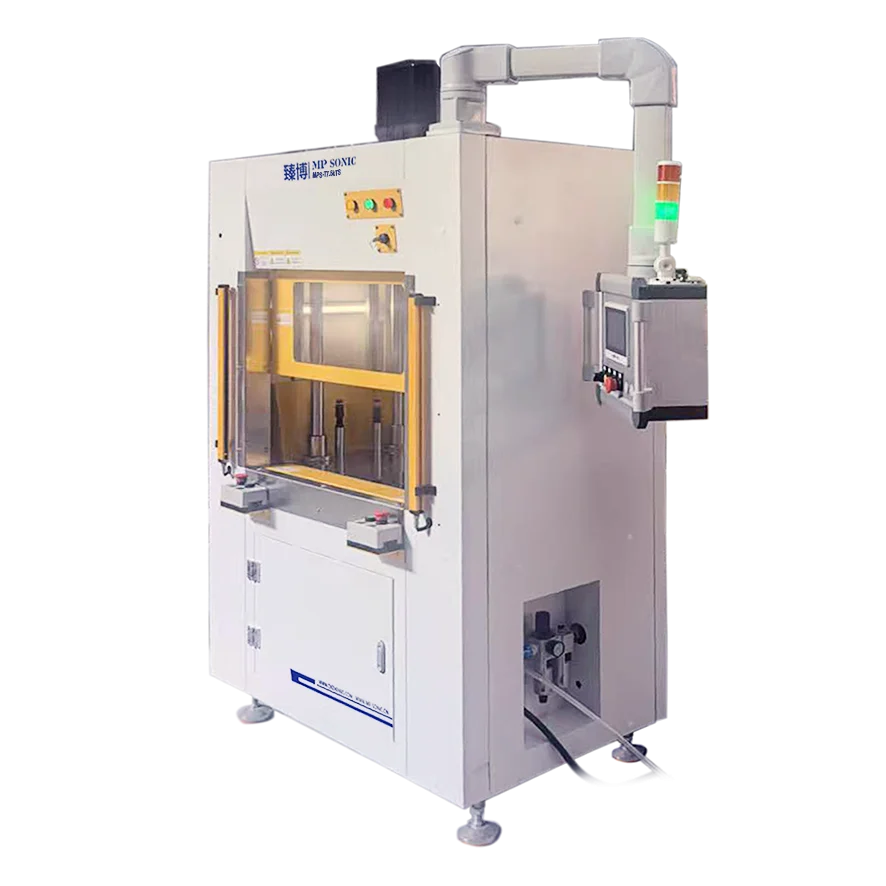
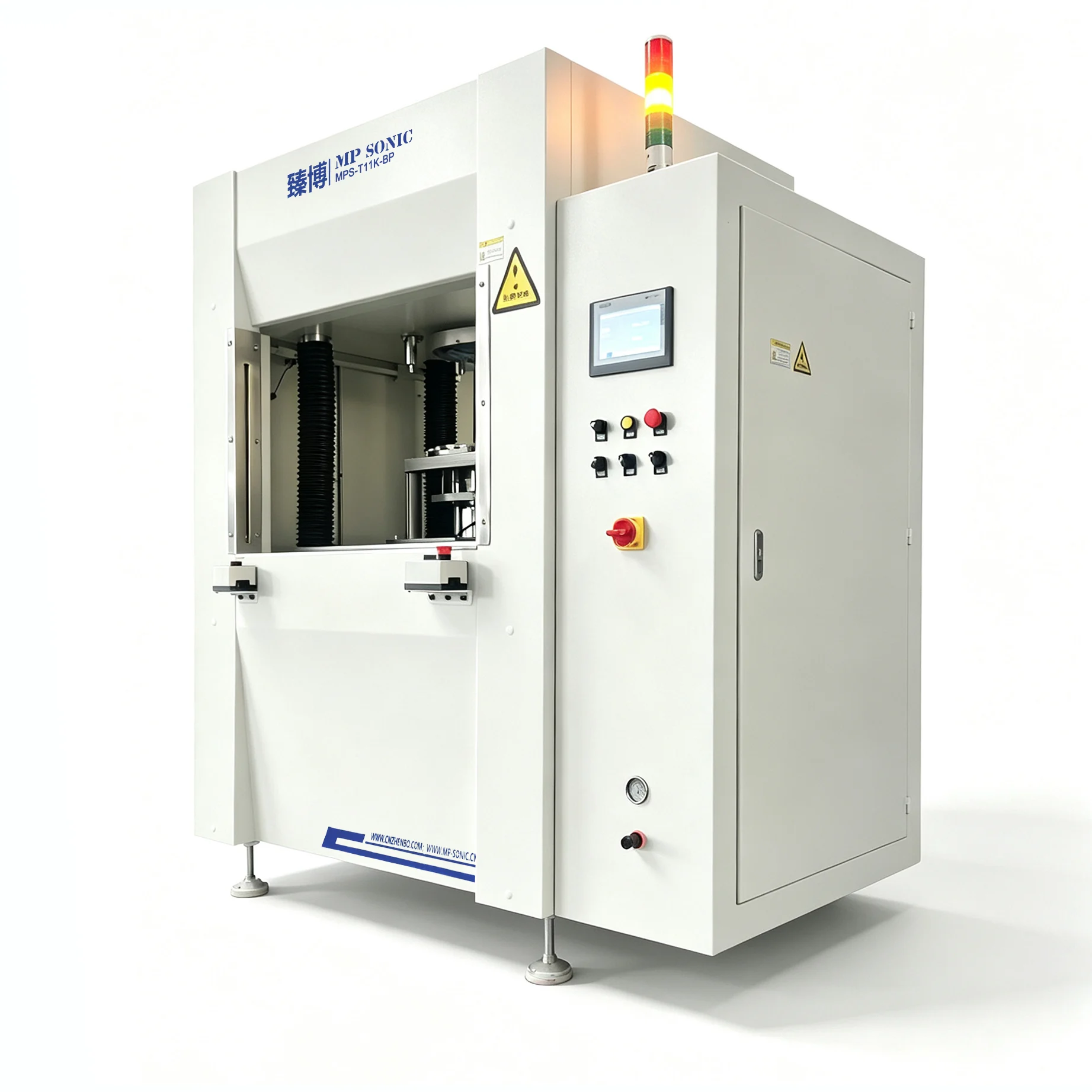
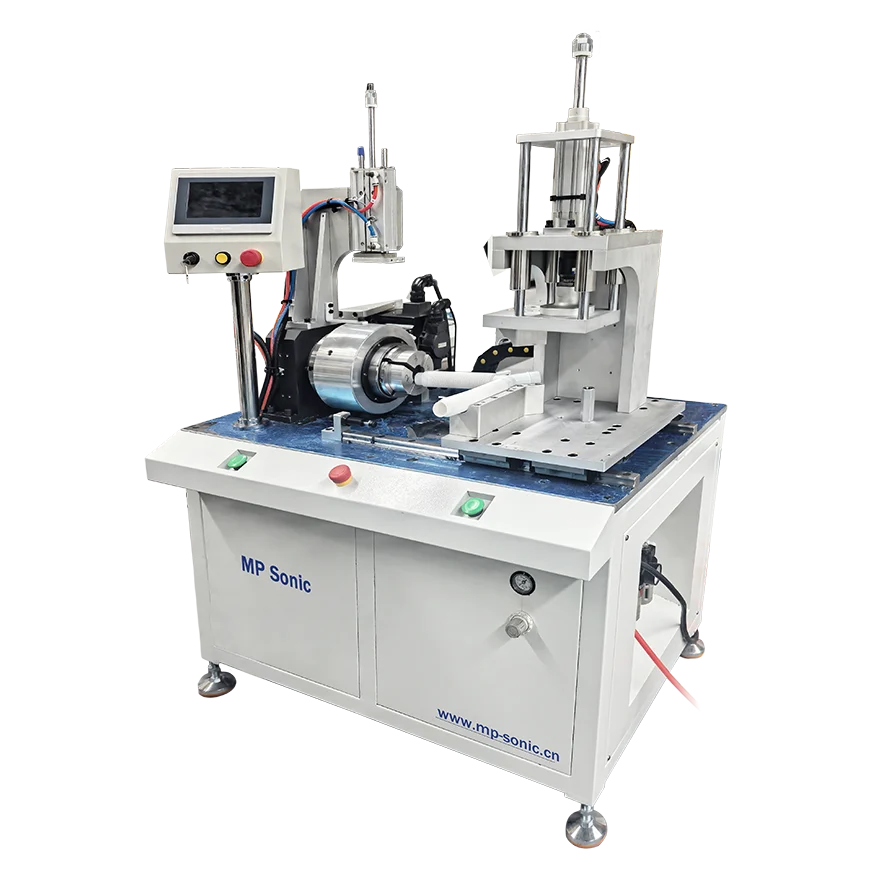
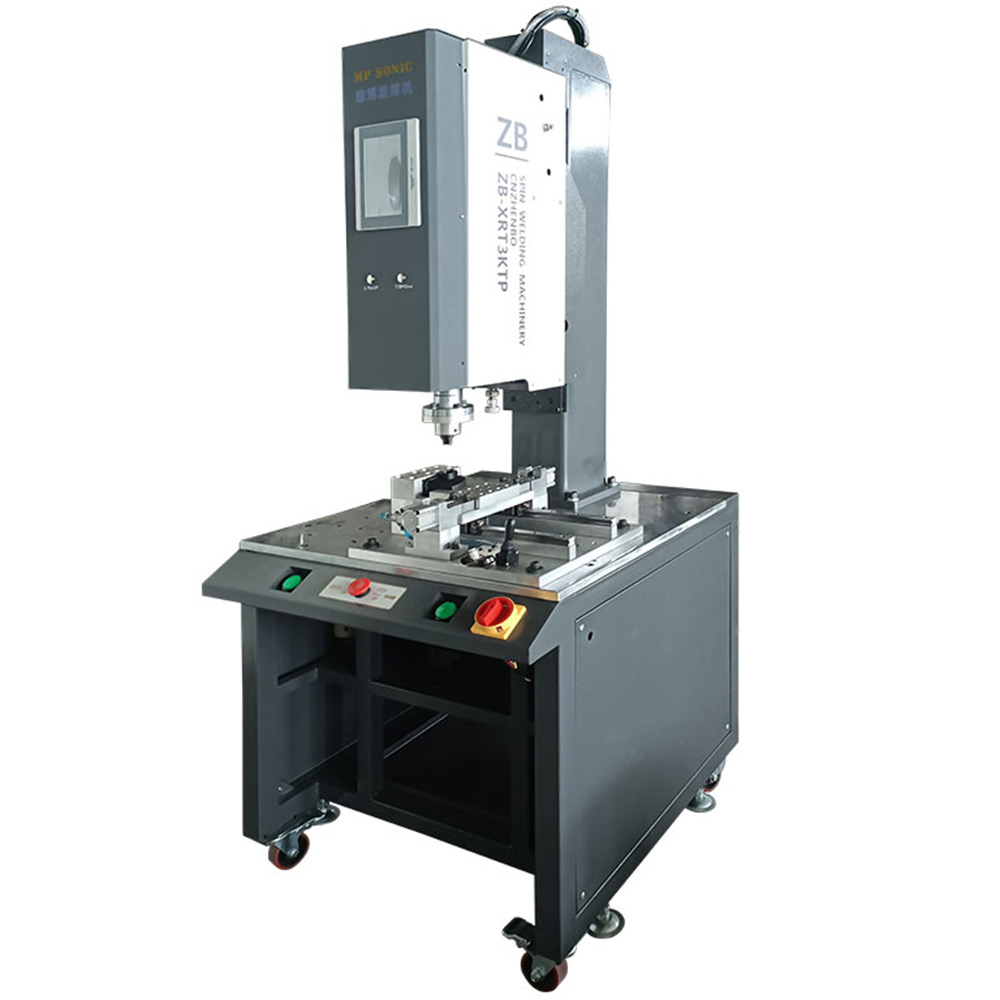
Spin welder, also called as rotation friction welder, means spin welding machine which applies rotation spindle to control friction under pressure casing heating energy and reach thermoplastic joining
Spin welding is a kind of joining technique that utilizes friction occurring at the contact surface between two work-pieces. Because it applies rotation to case friction, spin welding is known as rotation friction welding or rotation welding. Spin welding can achieve hermetic joining in efficiency & reliability. During spin welding, one work-pieces is in stationary while the other work-pieces is rotating around its own axis as the rotation center, simultaneously, external pressure forces two work-pieces in tight contact, casing temperature rising due to which melting to material at the friction area. When the molten material reach to the desired volume, machine system stops rotation and maintains the pressure forcing two work-pieces until molten material cools down and re-solidifies, thereby the welding is completed.
Spin welding is applicable to both thermoplastic material and metal material. Spin welded products must have circular cross-section at the joining interface which allows unhindered rotation. Spin welding method is welcomed due to the advantages of high operation efficiency, cost-effectiveness and exceptional welding result.
Ⅰ.What is the benefit of spin welding:
High operation efficiency
Spin welding friction time normally less than 10S, enabling rapid production cycle;
Reliable welding result
spin welding achieves welding in strength and air-tightness, ensuring durable joining;
Economical welding cost
Spin welding requests no additive or other consumable material, reducing material expense;
Easy in operation
no skilled operator requested, and automatic production can be realized;
Lower maintenance & equipment simplicity
Minimal equipment investigation and maintenance cost.
Ⅱ.How the welding rotation cased?
The rotation of spin welding is typically driven by electrical motor or pneumatic rotator. Electrical motor achieves high speed and high torque output, which is suitable for welding parts in varies size from small to big, in contrast, pneumatic rotator is ideal for the welding of small parts requesting low rotation torque.
The critical is that electrical motor realizes more reliable in control than pneumatic rotator, stable output of electrical motor can be controlled by electrical circuit design easily, in contrast, pneumatic rotation is sensitive to the change of the external air pressure or flow which leads to leading to potential inconsistencies.
What’s more, electrical type spin welding can realize orientation welding with servo motor or step motor, but it is impossible by pneumatic rotator.
Ⅲ.The critical factors in spin welding:
1.Rotation speed (Angular Speed VS. Circumference Speed)
Angular speed (rpm) is the primary reference of rotation speed, while circumference speed (mm/s) is critical to ensure sufficient frictional energy to melt material, because melting depends on friction, a minimum motion distance in limit time must ne achieve to generate enough heat.
To control circumference speed, the rpm must be adjusted based on the diameter of the welding area. Normally larger diameter requests lower rpm for the same linear velocity.
Eg. For a small part welding, high angular speed requested to ensure enough circumference speed, while a larger part welding requires lower angular speed to avoid excessive heat buildup.
2.Rotation torque
A critical technical parameter ensures effective rotation against frictional resistance, which must be adjusted based on:
Diameter of the welding area: larger diameter increases rotational inertia which requests higher torque.
Weight of rotation fixture: the heavier fixtures, the higher resistance, the higher torque requested;
3.Clamping force
Ensures effective friction, material melding and bonding. The optimal applied value depends on:
Parts size and weight: the larger/heavier parts requests higher clamping force to maintain contact;
Material Properties: Softer material normally requests lower clamping force while hard material normally requests higher clamping force;
Deformation condition of parts: during spin welding, a suitable clamping force is requested to correct the parts deformation. The clamping force for deformation correction should be based on the stress or hardness of parts deformation.
Desired welding strength: stronger joint often needs higher clamping force to prevent slippage.
Ⅳ.Orientational spin welding
Orientational spin welding is a technique that precisely strop welding rotation of the spindle at a predetermined angle applying step motor or servo motor. It ensures accurate positioning between two work-pieces then the frictional heat reaches the target volume, achieving high precision assembly of parts in ideal.
Note: for reliable control, MP Sonic provide equipment applying servo system controlling spin welding controlled.
Ⅴ.Welding force & depth control
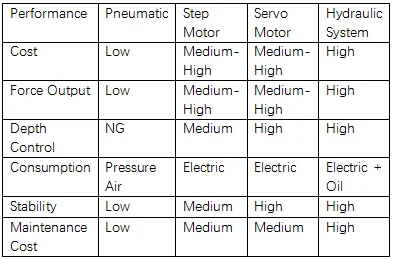
According to the requirement, the welding force and depth can be controlled by pneumatic cylinder, step motor servo motor or hydraulic system.
Pneumatic system: driven by compressed air, cost-effective but limited in precision;
Step Motor: Controls welding force by pulse signals, suitable for medium precision task;
Servo Motor: controls welding force by pules and applies encoder feedback for real-time adjustments to achieves accuracy of control to welding force and depth;
Hydraulic System: provide strong force and precision control with hydraulic oil, but in higher maintenance cost.
Ⅵ.Why chose MP Sonic Spin Welder:
MP Sonic applies servo motor to drive welding spin welding, which achieves high torque output besides orientational control;
With much projects experience, enables MP Sonic provide you suitable spin welding solution;
MP Sonic strict machine quality control in design, manufacturing, assembling, trial, etc, ensures machine reliability in duration and precision for long duration.
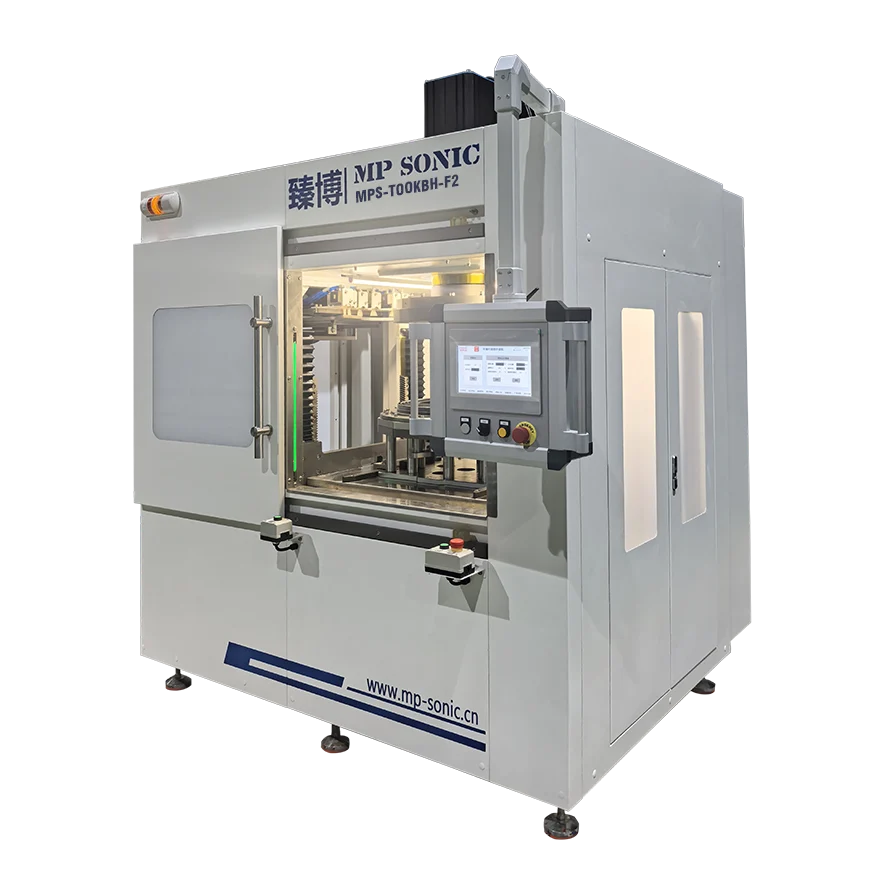
MP Sonic developed MPS-T00KB Series equipment for the joining of balancer with method of spin welding. MPS-T00KB balancer welder applies servo motor system in with high torque output to achieves high welding ability. Servo system or servo controlled hydraulic system is applied to force the clamping of welding to ensure the welding strength.
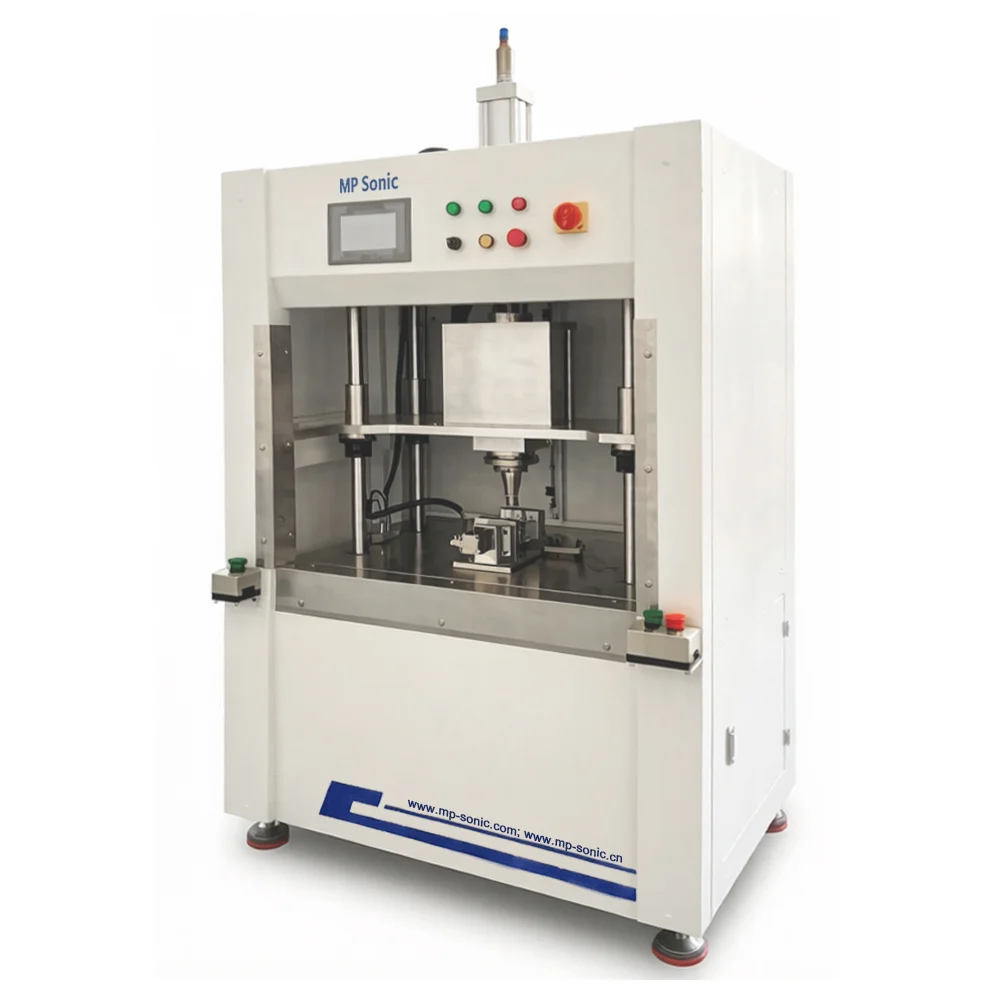
MPS-TP Series spin welder applies pneumatic cylinder to force welding from machine top. Machine applies servo system to drive upper fixture rotating to case friction and finish welding. Machine construction is 4-linear-rods guiding design with gear bars to ensure motion balance.
Machine designed in L-type construction for the welding of water filter tank. Machine applies servo motor systems to drive the welding spindle and to force the welding. Clamps and sliders controlled by pneumatic system designed to base fixture for easy loading and unloading of tanks.
Full automatic line for pipe & flange welding by spin. Machine designed with two welding spindle, pipe and flanges is feeded by machine system as well as automatic unloading after welding.
Machine applies servo system to control welding spindle, welding spindle speed and cycle is settable, auto feeder system designed to machine. After welding, leak test is carried by machine. Machine designed three operation model: full auto mode, operator mode and manual mode. Complete cycle is about 40S.
MPS-T00K-F series machine is designed to injection liquid into balancer though the hole and then seal the hole with plastic plug by welding (by ultrasonic or spin friction). Machine is designed in safety standard according to ISO 12100 & ISO 13849-1, CAT.3/4
Spin Welder applies servo systems for welding spindle and clamping force. Machine welding control in high precision, welding depths, rpm, welding spindle round and motion speed can be controlled for challenging welding.
Spin welding is a kind of frictional joining technique in capability of producing strong, air-tight welding to parts with a circular-axis jointing, which with high bond strength / hermeticity requirements. During spin friction welding, one part half is held stationary in a holding fixture while the other one is rotated against it under pressure at a high speed normally 80~1600 rpm, which results friction at the touch area of two part halves (means the joining area) and causes the joining surfaces to melt until form fuse together, after which stop rotation and keep two part halves together under pressure until the interface of the jointing area cool down and become solidification.
Machine applies rotation friction controlled by servo system to generate heating to material and realize the welding between drain pipe and connector under pressure. Machine is horizontal designed, welding force and clamp controlled by pneumatic system.
MPS-T3KTP is a spindle friction welding machine designed by CNZHENBO | MP Sonic in high speed rotation friction for thermoplastic jointing in small diameter.